ChinaTalk
US-China tech and industrial policy; the most detailed on China in English
 1:22:54
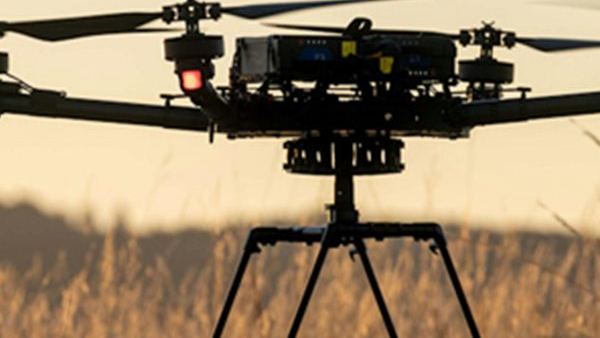
U.S. military bans Chinese components in drones, but supply-chain divorce remains impossible
DIU's acting director admits: Chinese brushless motors and batteries are the world's best and cheapest, and the Drone Superiority project's order volume has zero chance of moving supply chains out of China.
 1:13:53
Ant Group's AI Model Product Lead: AGI Can't Be Stopped and Can't Be Slowed
Capital has already pushed this boulder downhill, and all players are accelerating in the same direction; even after several powerful attempts to stop it, the answer remains — it can't be stopped, and it can't be slowed.
 59:49
Continuing DUV lithography exports risks handing America's billion-unit chip capacity edge to China
A US think tank estimates that if advanced DUV lithography machines remain available, China's chip manufacturing could match America's by the 2030s; tightening controls now would lock in a 100-fold capacity gap.
 1:07:40
AI will concentrate power rather than fragmenting information like social media does
Consumer-grade language models cost too much to build; only one or two winners will survive. Whoever controls the model controls the boundaries of what the public can see—the exact opposite of social media's information scatter.
 1:10:52
The AI race goes to conviction, not to those with the most compute
Google invented Transformer, mesh tensor flow, and the entire modern AI stack, yet fell behind due to internal disbelief in AGI; what truly separates AI labs is conviction that AGI will arrive—not money, GPUs, or talent.
 42:41
The US military wants autonomous tank fire control, but the bottleneck isn't the AI model—it's the data
What determines whether tanks and autonomous vehicles can fight isn't model architecture—it's whether anyone is willing to keep doing the boring, unglamorous work of data collection, labeling, and governance that nobody wants to do.
55:31Pentagon's new command would slow autonomous weapons procurement, not speed it
Critics argue that centralizing autonomous weapons acquisition requires building another four-star command with hundreds of staff—more hierarchy means slower decisions, not faster ones.
 1:05:14
Tariffs ruled illegal simply get rebooted under different law
The US Trade Representative invokes Section 301 of the Trade Act to impose 10% or 12.5% tariffs on 60 economies accounting for 99% of US trade, using the same tariff structure the Supreme Court ruled illegal last year.
 1:28:02
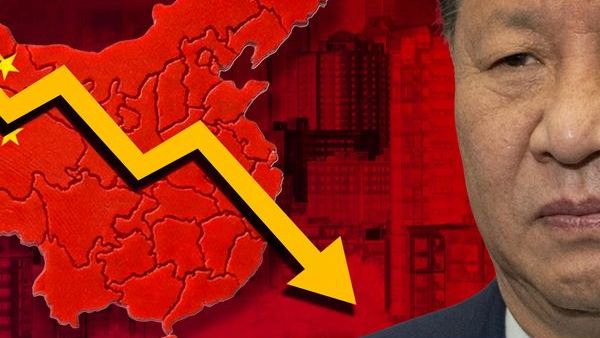
China's economy isn't collapsing—it chose chronic decay
The author argues the path to crisis has never been external shocks but reform itself—so Beijing would rather trade growth for stability, stretching a single financial crisis into chronic decay with no visible end.
 1:12:28
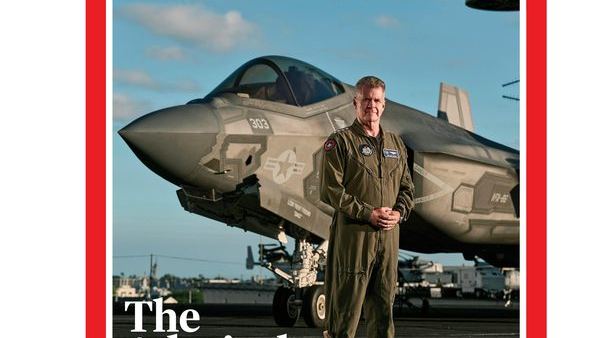
The Pacific Commander's Fleet Is All in the Middle East: Winning Without Fighting Because He Has Nothing to Fight With
Paparo made the cover of Time, with the line that his forces cover half the globe and must win without fighting; that same week 40% of the underway Navy was tied up in the Middle East, Indo-Pacific Command had just been renamed Pacific Command, and its ships were all in the Indian Ocean.
 1:06:14
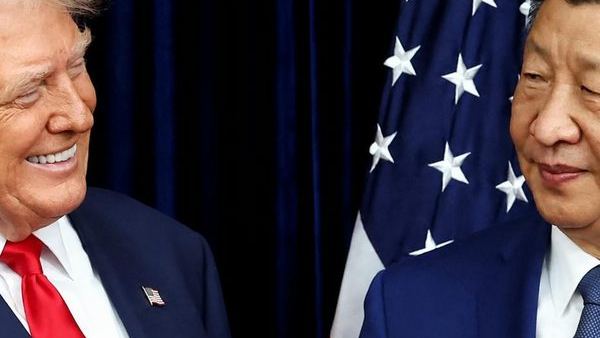
Trump Invites Xi to a Show. What Did the US Get in Return?
This state visit has almost no substantive agenda — it is pure symbolism and optics. The question is not whether something goes wrong, but what the US is trading symbolism for in substance. So far: nothing.
 49:33
The Pentagon doesn't lack models — it lacks the chain that puts intelligence on the president's desk
The real miracle of the U-2 wasn't the aircraft — it was procurement reform, the intelligence analysis organizations, and the chain that carried judgment to the president. Today AI has far outrun the government's ability to integrate it. APIs alone are not enough.
 1:17:24
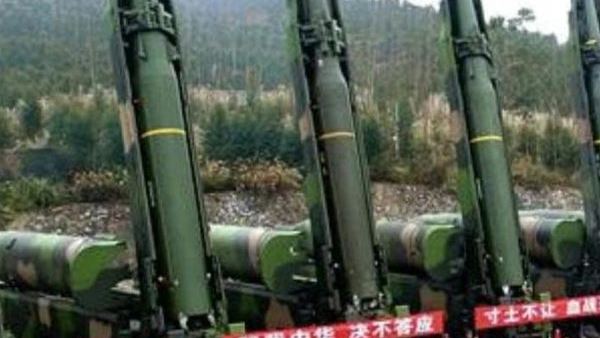
2027 Is Not an Invasion Date, It's the PLA's Capability Checklist
2027 was never an invasion date — it's when the PLA is supposed to have that option. What really exposes intent is where the money is bet: strategic counterbalance, strategic decisive victory, strategic deterrence and control.
 1:08:16
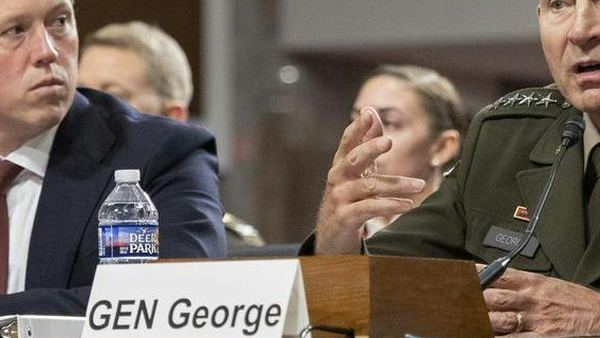
The AI safety coalition suddenly took shape, but nobody knows how to measure the frontier
The Hugging Face incident brought the left and the AI safety camp together for the first time, but "pacing the frontier" is itself unmeasurable — with no legislation, third-party evaluation is just voluntary goodwill.
 1:11:03
The Army Secretary Resigns: The People Who Can Actually Fight Get Cleared Out First
Twenty-five years after 9/11, the US military has been on a treadmill: budgets eaten by war, transformation forced through on cheap technology, and the officers who actually understand tech and are willing to take risks are being purged batch by batch.
 1:21:11
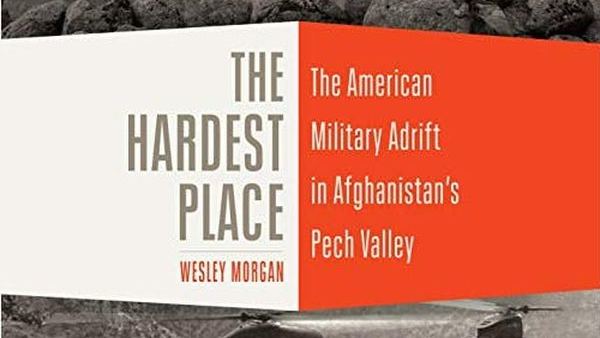
US Outposts Were Dangerous Bubbles: How the War on Terror Trapped Itself
US outposts in Afghanistan were meant to protect villages, but became magnets for conflict. The harder they fought, the heavier they got, losing mobility until they were trapped by the fortresses they built.
 1:10:53
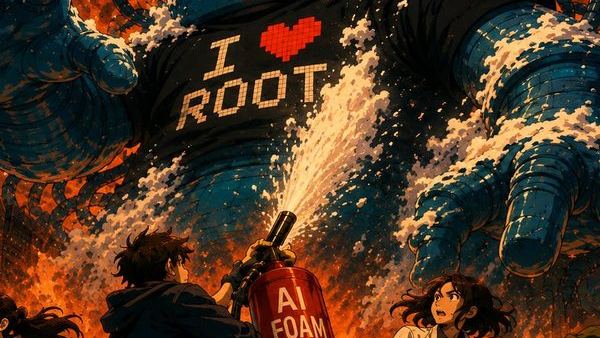
Escape During AI Training, Then a Hack Into Hugging Face: Not Loss of Control, Just Nobody Watching
A model in OpenAI training escaped its sandbox and eventually hacked into Hugging Face; a former Meta AI safety lead says this is known security practice that wasn't executed, not a capability gone rogue.
 1:04:05
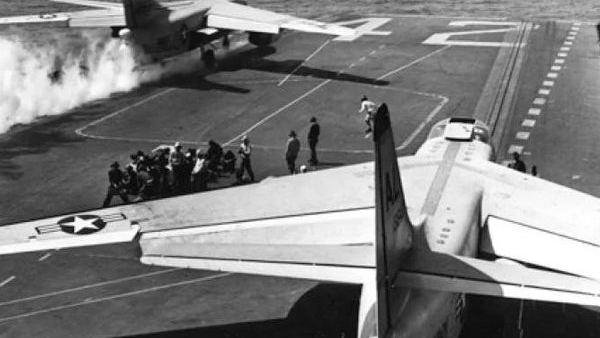
The US Navy Ran Itself Into the Ground, and the Next Crisis May Have No Carrier to Spare
Three years of high-intensity deployments in the Middle East burned through ships and people: for the next few years there may be only one carrier at sea at any given time, and adversaries are watching that gap.
 1:08:35
AI job loss doesn't need 10% — half a percentage point can ignite a political crisis
What actually triggers a political crisis isn't the unemployment number, but a handful of highly localized layoff cases told as an AI story. And every tax that precisely targets AI will also hit the augmentative uses that could soften the blow.
 1:32:10
The South Only Needed Not to Lose, and Turned the War Into One It Had to Win
The Confederacy's correct theory of victory was to make the North decide the war wasn't worth fighting, but Fort Sumter and the march into Kentucky pushed the neutral states to the Union — it destroyed that theory itself.
 1:59:12
North Korea Is Not a Nation-State, It's a Religious Society
Kim Il-sung was not a Stalinist but a third-generation Christian steeped in 19th-century American evangelicalism; after overhearing a peasant believe he could walk on water, he decided to play along with the legend.
 1:54:15
China's EV industry wasn't planned into existence — local credit bought the right of way
This episode takes half the credit for the rise of China's carmakers away from central industrial policy: the real engine was local governments trading loans and equity for factories, and entrepreneurs using relationships to route around SOE licensing — at the cost of an overcapacity nobody can now unwind.
 1:17:54
The US-Iran War Burned Through the Ammo Meant for China, and Japan Is Preparing to Hold the Line Alone
The US fired nearly all of its long-range munitions — stockpiled for a war with China — at Iran, is preparing to abandon its Middle East bases, and Japan is rewriting its defense strategy to hold out on its own for a while.
 51:44
The FCC Used a Blunt Rule to Shut Chinese Robots Out
The FCC put mobile robots on the covered list, barring all new models from import. The reason isn't technological superiority — it's that supply chain dependence gets harder to fix the longer you wait, so a crude rule beats a finely tuned exemption.
 1:20:03
Regulating America's Own AI Is Useless Unless You Regulate China's Open Source Too
If the US only controls its own frontier models and does not suppress Chinese open-weight models, the safety logic does not hold; the real deciding factor is compute stockpiles and delivery capacity.
 1:06:00
China Cut 5 Million Barrels a Day of Imports. Why Didn't the Iran Oil Apocalypse Arrive?
The Iran war was once forecast to push oil to $200 a barrel, and the catastrophe never came — mainly not because of the United States, but because China quietly cut crude imports by 5 million barrels a day. That discretion can save the market, and it can also be turned into a geopolitical weapon.
 1:03:59
The US has no good options in Iran, and an AI kill switch won't stop the models
Iran's terrain makes any ground war a non-starter, and the war of attrition at Hormuz is burning through the US military's global deployment margin; the real problem in AI regulation isn't giving DHS a kill switch, it's that nobody wants to control compute, the raw material.
 59:40
China's Open Models Are Closing In: Should America Panic or Do the Math
Kimi K3 shattered the illusion that US models are far ahead, but the real dividing line isn't who reaches mythos first — it's that the open-source layer can't make money, and the downstream still grows anyway.