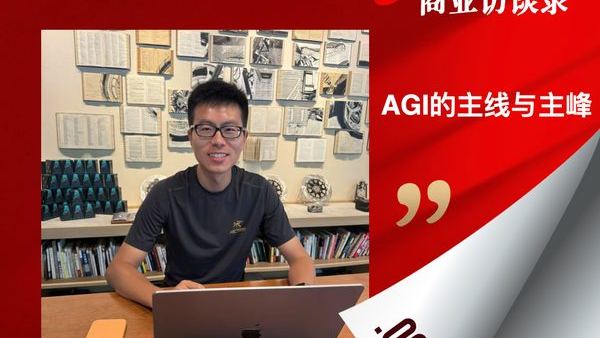
张小珺·商业访谈录
The most solid long-form AI and business interviews in Chinese
 2:51:18
Robots don't stall because they're slow—they stall because no one refills them
Dyna's napkin-folding robot achieved 99%-plus success rates with paying customers, but the company halted scaling—completing a task isn't managing a workflow, and robots need constant human resupply like a babysitter.
 2:34:18
AI's Frontrunners Are Just Refineries, Not the Native-App Winners
AI has entered its agent phase: the first-stage leaders are only refineries, not the native-app winners; new platforms don't come from old platforms; organizations must shift from jobs to tasks; and in the end what people compete on is the creativity to conjure something from nothing.
 2:04:19
K3 Has No Disruptive Innovation, but Pushes Activated Parameters to the 100B Scale
Sun Yutao reads the Kimi K3 technical report, pointing out that it has no single breakthrough but rather fuses existing techniques such as linear attention, hybrid attention, and dynamic load balancing to achieve activated parameters at the 100B scale; he judges that large models will see no more Transformer-level innovations, only incremental improvements.
 1:09:50
17-Year-Old AI Native: The Reason to Study Math Has Become Proving to Universities That I Can Endure Hardship
After AI arrived, his reason for studying math degraded into proving to universities that he can endure hardship: the path he could once see — university, PhD, advancing mathematics — has narrowed, and the classmates around him who want to work in aerospace are also losing their upward motivation.
 3:36:12
NVIDIA's VP of Research: The Endgame for Models Is Ecosystem, Not Beating Rivals
Ming-Yu Liu: model capabilities will eventually converge, and NVIDIA's open-source world model is not competition but groundwork; physical AI's GPT moment has not arrived, but the conditions are converging.
 1:40:35
AI Research's Next Breakthrough: Build a Physics for AI First, Then Let It Discover Architectures on Its Own
Liu Ziming argues that real AFAI is not writing papers or tweaking training pipelines, but using physics methods to structure research first, then training a meta model to predict training curves, and ultimately letting AI discover the next generation of architectures itself.
 3:00:26
Open-source models will win; vLLM is the Linux of AI inference
vLLM is already the most active open-source project on GitHub, but You Kaichao's real judgment is this: model capabilities cannot stay hidden for long, open-source models will ultimately win, and the inference engine is the next Linux — the moat is fast iteration, not the model itself.
 1:52:54
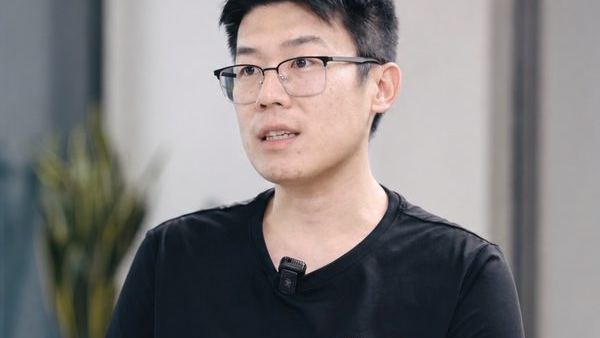
Embodied AI hasn't reached its GPT-1 moment — it's stuck because the data hasn't scaled up
Shen Yujun of Ant Lingbo judges that embodied AI has not yet reached its GPT-1 moment; the bottleneck is that the data hasn't scaled up: internet data is two orders of magnitude larger than real-robot data, and ideal pretraining needs a million hours as a starting point. To get there, the team completely redid visual pretraining, insisting on starting from the sensor.
 3:48:04
Robots don't need to be humanoid to fold laundry or make coffee
Pi uses three main papers to push the robot brain from capability to generalisation to performance; Keli Yiming (柯丽一鸣) argues humanoid form is not the problem worth solving right now, real-robot data is irreplaceable, and the experience data robots generate themselves is the next step.
 3:01:26
Former SpaceX executive: the rocket was never the point — what Musk wants is all of space
SpaceX never thought of itself as a rocket company; the rocket is just the means. Falcon 1 was retired the moment it worked, Falcon 9 pushed cost per kilogram to orbit from $20,000 down to $3,000, and Starship is aiming below $100.
 3:38:52
Anker Does Chips: From the Five-Series to the Seven-Series, a Consumer Electronics Company Catching Up on Its Homework
Anker's first 11 years went smoothly, but in 2022 it found that the product lines it had built couldn't beat the unicorns outside. Yang Meng's solution wasn't to swap people out, but to transform the company from a five-series product company into a seven-series innovation company — at the cost of catching up on the values of first principles, pursuing excellence, and growing together.
 1:28:21
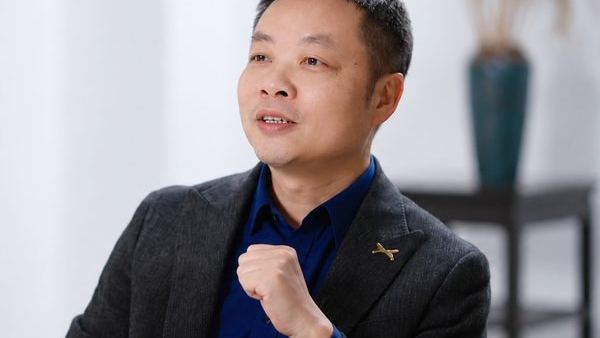
He Xiaopeng: General-purpose humanoid robots are 99.99% doomed to die — we're betting on that 20% win rate
XPeng shut down an autonomous driving system that cost it a few billion RMB, because what you get from a software methodology plus an AI toolbox is just an "AI chimera." He puts the odds for general-purpose humanoid robots at two in ten, and says robot startups are 20 to 100 times harder than building cars.
 2:18:32
The Harness is the operating system; the model is just a swappable processor
Model companies are refineries that produce base oil — the real money is in the chemical plants and the car companies. Users are more loyal to the Harness: they'll swap the model, but they don't want to swap the shell that holds their memory.
 1:23:53
The scarcest thing in the AI era isn't information, it's a conversation with a human feel
When 90% to 95% of informational content can be pulled straight from an AI, conversations whose purpose is exchanging information are being hollowed out, and what's left between people is emotional connection.
 3:50:35
AI Is the Wave, the Surfer Doesn't Matter: Confessions of a Researcher at a Model Giant
Pretraining hasn't hit a wall — most people who think it has have a bug in their own work. AI is fundamentally simple, because it can run experiments. The era of individual heroism is over; what matters now is organizational systematicity and reliability.
 2:17:48
The bottleneck for agents isn't intelligence, it's that they can't learn to become experts
General intelligence is already good enough and cheap; what's truly scarce is specialized intelligence — letting an agent, like an intern turning into a seasoned veteran, continuously learn the world model of some small world.
 3:36:36
OpenClaw made Luo Fuli change her verdict: an agent framework can cover a model's weak spots
She first thought it was just an operations-flavored shell. After installing it late one night during Spring Festival, it took over her life and her research within two days. Her conclusion: a complex agent orchestration can lift a mid-tier model's weak spots to near the top.
 4:24:17
AI brute-forces a Putnam problem with thousands of lines of Lean code, and that is not a victory for intelligence
The Putnam competition has produced only five perfect scores in 98 years. AI just got the sixth — but it did not walk the human path. It enumerated its way through thousands of lines of Lean code. Automated theorem proving existed long before AI.
 1:22:40
Coding Is AGI's Second Act: No Leading Coding Model Is Like No Leading GPU
The real dividing line for model companies isn't consumer DAU — it's whether you can organise a few hundred of the smartest people to go all in on the dirty work of data. Anthropic won on strategic focus; OpenAI lost by wanting everything.
 1:52:54
The Only Thing That Matters in the AI Era Is Being Yourself, and Social Networks Need to Be Rebuilt
Tristan argues the only thing that matters in the AI era is building subjectivity — let context accumulate, let AI handle the most tedious entropy increase in socializing, and let humans take over only the most important connections.
 2:38:22
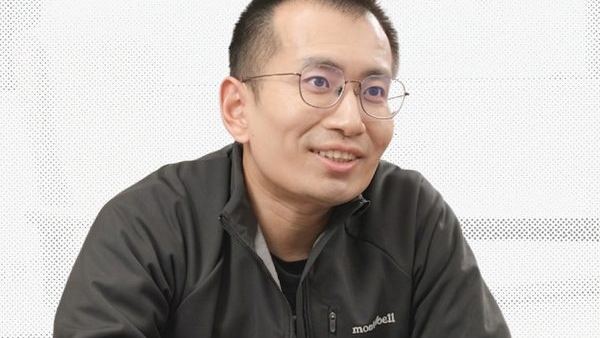
Tesla's data flywheel doesn't work on robots
Tesla collects the most data because it has deployed the most of its own cars — the advantage is the body. But embodied AI has no million-robot fleet, so the most data must come from simulation and human first-person footage. A body maker cannot be the best brain maker.
 6:45:29
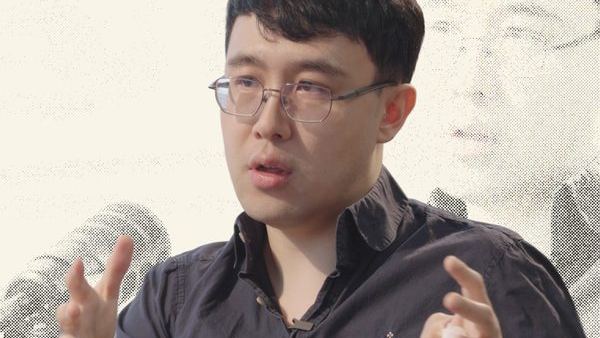
World Models Are Not Language Models: Xie Saining Says LMs Will Eventually Wither
Xie Saining argues that language models are excellent tools but not the foundation of general intelligence — they will eventually wither. The real foundation is vision and representation learning, which is why he left Silicon Valley and co-founded AMI with Yann LeCun.
 3:04:52
The robotics industry is not romantic: the chain is too long, you have to stick your head into the dirt
Xinghaitu founder Gao Jiyang says robotics startup competition is a hexagon: the full machine, supply chain, data, models, channels, terminals. The algorithm propagation cycle is only two to three months — the smallest moat of all.
 2:01:27
Yin Qi Becomes Chairman of StepFun: Neither 2B Nor Pure 2C Works for a Foundation Model Company
A foundation model burns at least 3 billion RMB a year and has to be sustained for three to five years, so neither 2B nor pure consumer software adds up; StepFun's bet is foundation model plus devices, trading software-hardware integration for a seat at the table.
 3:14:15
Miaoya Is Not an AI Native Product: It's Just an Internet Product That Uses AI Well
Zhang Yueguang reviews two years of entrepreneurship: Miaoya trades user freedom for stable output, which is fundamentally internet product thinking; AI Native products need to shift to context-oriented design, and one-way-door products are what he'd bet everything on.
 2:26:39
The world's first listed large-model company: Zhang Peng says there is no bubble in Chinese AI
There may be a bubble in the US capital markets, but not in China — China's AI spending is only about one-twentieth of America's, nowhere near enough. Zhang Peng's logic: we're still far from AGI, the money isn't enough, so we have to invest more; it won't happen on its own.
 3:31:17
Manus's Last Interview Before the Sale: AI Has No Wild West Because There's No New Platform
The mobile internet's wild west came from a hardware generational shift: desktop to phone made giants and individual developers equals. AI's technological leap is bigger, yet no wholly new platform appeared, so giants, startups and individual developers all moved at the same speed. The wild west does not exist.
 1:18:02
AI isn't a bubble — it's a war where the giants will burn their last dollar rather than leave the table
What people call an AI bubble is an accounting done on commercial returns; the giants treat it as a new kind of national defense or nuclear weapon, and what they're calculating is the risk of being disrupted — so they'd rather burn their last dollar than leave the table.
 1:43:06
In the AI Era, Networks Have No Natural Monopoly and Marginal Cost Doesn't Approach Zero
Internet products are giant towns: marginal cost approaches zero, so the winner takes all. AI costs one more token for every extra user, and that difference will rewrite the business design of traffic nodes.
 1:24:26
OpenAI's business model is a negative snowball: the more it burns, the more it loses
A model company has to spend ten times last year's training cost on the next generation of models, while revenue only comes back at twice last year's training cost. Add 2, subtract 10, and cash flow goes more negative every year. Only on the day it stops burning does the income statement suddenly look good.
 3:23:03
2026 Is the Year of Return: Models Have No Secrets, Applications Have Moats
Model capability progress is slowing, Chinese open-source models have compressed the gap to 6-12 months, and the API business has no monopolistic barrier; what is truly valuable is the layer of context, tools and environment outside the model.
 3:42:54
In the AI era every company ends up a generative system company, and the middlemen get killed off
Internet platforms exploit the production side through their power of distribution: the same content gets different reach depending on who posts it, which shows the distribution mechanism has failed. Generative systems internalise distribution, connecting demand and production directly — production and consumption become one.
 48:00
48:00No AI bubble in sight for three years, but concentrated VC consensus is the real risk
Zhu Xiaohu says the bubble talk is secondary-market investors deliberately steering a correction; the real problem is that every primary-market deal has become a Club Deal, so GPs can't make big money and LPs aren't happy either.
 2:06:15
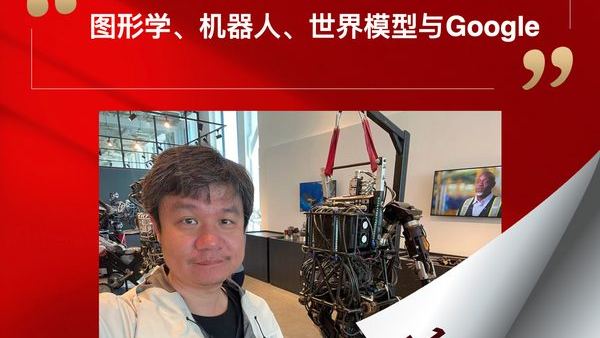
The biggest bottleneck for robots isn't the algorithm, it's the data
Tan Jie has spent ten years doing robotics at Google DeepMind, and his judgment is: the robot foundation model is still not an independent discipline, just a finetune of a multimodal large model; the real bottleneck is data, and collecting data by teleoperation is not the endgame.
 1:48:45
Xpeng Tears Out the Language Model: Language Is Poison, Simple Is Beautiful
Xpeng's new autonomous driving lead Liu Xianming (刘先明) tore the Language out of VLA, using 270,000 to 300,000 hours of pure vision data to output control signals directly, because Language is discrete and inefficient and becomes the bottleneck for scaling data.
 1:43:25
Pure linear attention doesn't work; a 3-to-1 mix is the emerging consensus
Pure Linear Attention has a fundamental flaw: no guaranteed floor. Kimi and Qwen have both converged on inserting 1 global attention layer for every 3 linear layers, while MiniMax retreated from M1 to Full Attention because its evaluation pipeline missed multi-hop reasoning.
 2:46:22
Li Xiang: No general agent within five years — what comes first is an agentOS
Li Xiang's judgment: a general agent will not appear within five years; what will actually appear is an agentOS, on which each profession builds its own professional agent. Because a production tool has to be able to act and replace professional work, not just give advice.
 4:22:37
The model is an oil refinery: the winner of the first phase is not the winner of the last
In business history, the companies that run out ahead in the first wave are almost never the winners of the next phase. Model companies are refineries that extract base oil; the value is in the chemical plants and the car companies.
 3:47:45
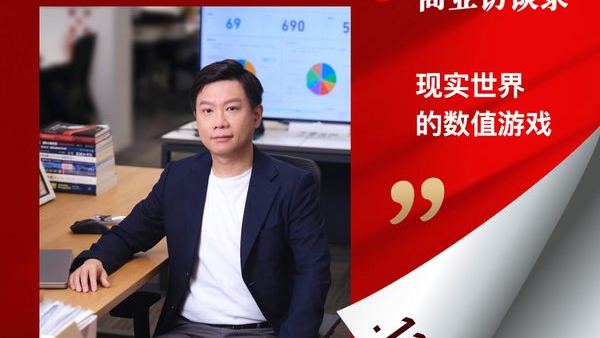
The model is a refinery; the money is in the chemical plant and the car company
If there are two or more foundation models, none of them can make money — they get competed down to the price of electricity. The real moat is context data nobody else saved, plus the last mile that big companies can never do because of how promotions work.
 2:31:32
The Second Half of AI: The General Method Exists, the Hard Part Is Finding the Task
Yao Shunyu says the main thread of AI has moved from "building weapons" to "choosing the battlefield" — the method is finally general, but the real bottleneck isn't reasoning ability, it's that models can't get the context inside people's heads.
 1:18:27
The core of trail running hasn't changed in ten years — Salomon broke out through women
China's core trail-running population was 100,000 ten years ago, and it's still 100,000 this year — the difference is it's ten years older. Salomon didn't drop its performance line; it pulled in newcomers through women and grew its membership from 100,000 to 8 million.
 1:41:13
Running a company like training a model: too much SFT and the team loses its creativity
Tim tells Yang Zhilin every day: manage with RL, not SFT. SFT is telling people directly what to do — too much of it and people lose their initiative; RL only gives a reward, but if the reward is badly defined, the whole team will hack it.
 1:09:11
Model companies mine; product companies refine
The best models capture the most traffic and revenue, but the mining window is shrinking: from two years to nine months to three or four months. Foundation model companies are going end-to-end into Agents, and app companies' cost disadvantage is structural.
 3:08:32
Lidar Prices Fell 99.5%, and It Wasn't Volume — It Was Design
Hardware cost reduction doesn't come from scale, it comes from design capability: shrinking a lidar that cost hundreds of thousands of yuan into a chip is what lets it go from a feature to a safety component, and finally to standard equipment.
 2:20:45
Kimi K2 Published the Whole Recipe, but Reproducing It Is Still a Craft
The Kimi K2 report lays out the full recipe for data synthesis, verifiable rewards and RL infrastructure, but every prompt and every parameter has to be tuned to hold steady — it is systems engineering, not an idea.
 1:41:09
Simulation Is Not the Simulator: In the Robot Data Famine, the Ones Making Money Are the Raw-Material Suppliers
Embodied AI is still at the GPT-1 stage and hasn't found the recipe for a scaling law. What's actually blocking the industry is high-quality physical assets and scenarios, not simulators — which is why the people building simulators are the ones making the least money.
 2:57:07
The biggest bug in scientist-founded startups: not knowing who the customer is
For its first five years Horizon sprayed 360 degrees across air conditioners, toys, home appliances and cars; in 2019 it cut half its people and bet everything on automotive, turning from a company firing in all directions into a strategy-driven one.
 1:30:07
AI Applications Haven't Found Their Scenarios, and DeepSeek Didn't Make the Startup Ecosystem Boom Either
Crystal Stream Capital's Wang Mengqiu (王梦秋) on why the capital winter isn't over, how DeepSeek flattened the information gap without creating new scenarios, why the general-purpose Agent may be a false premise, and why the real need is vertical workflows.
 2:38:52
A robot company's biggest enemy isn't technology — it's teleoperation and storytelling
Wang He says this generation of embodied AI companies has only two dead ends: drifting along telling stories, or rebuilding from scratch in every new scenario. He's betting on synthetic data — real data is just 1% of training volume.
 1:32:15
Mercedes-Benz China team uses data to fight for a say with German HQ
The era of Tier 1 black-box delivery is over; OEMs want to operate the data themselves. The China team didn't seize that say — they earned it through commitment, delivery and trust.
 2:08:56
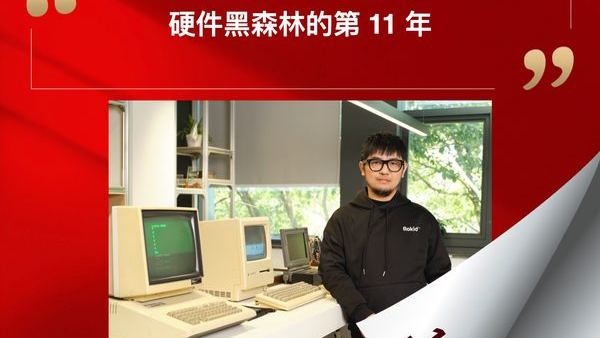
AI will replace the phone, but the winner may not be a phone maker
Zhu Mingming says AI will definitely replace the phone, but glasses are not a winner-take-all business — at most ten players can sit at the table; what he is betting on is the two or three years when the big companies can't see it, don't understand it, don't care about it, and it's too late.
 1:45:27
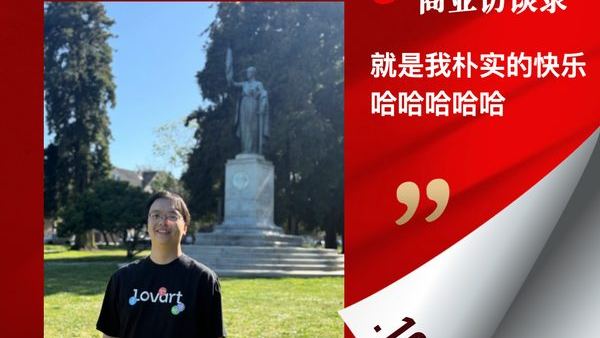
AI Application Startup: General Agents Can't Eat Verticals, and Year One Nearly Killed Us
Chen Mian's post-mortem: the first-generation product won the subsidy war but got taken down, with only 4,000 yuan left in the bank; the opportunity for vertical Agents lies in general models being unable to digest industry data and interaction — provided AGI doesn't arrive within five years.
 2:28:58
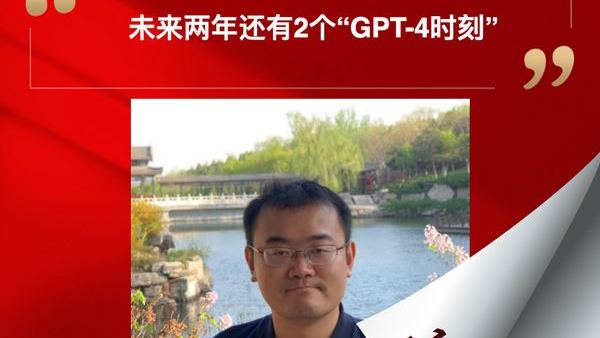
What Multimodality Lacks Isn't Architecture, It's a Chain of Thought in Visual Space
Image understanding, generation and human alignment are inherently split, because images come from nature and carry no human understanding of themselves; generative models are still stuck at the language model's primitive one-shot form, without even a CoT.
 2:42:44
Agent Is Like a Gorilla Just Picking Up a Burning Stick; Token Consumption Rate Is the Key Metric
Ming Chaoping swapped the key metric for AI products from DAU to token consumption rate, then further to per token valuation—because high token consumption doesn't mean high value, just as the efficiency of converting oil into mechanical energy is what matters.
 57:57
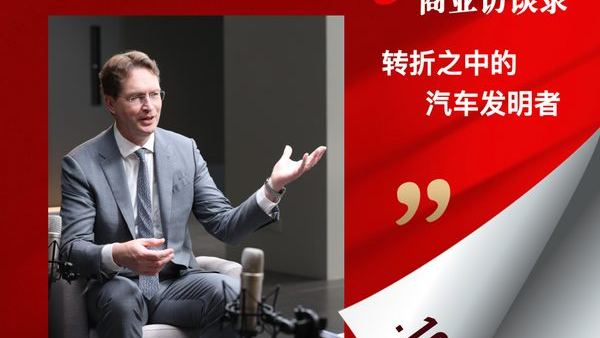
57:57Mercedes CEO: If the Market Isn't Fully Electric by 2030, We'll Build Both
Ola Källenius refuses to bet on a single technology path: he insists on launching a full EV lineup before 2030 while keeping both combustion and electric options. He judges China to be the fastest-moving, most competitive market — win there, and the odds of winning globally rise.
 2:34:35
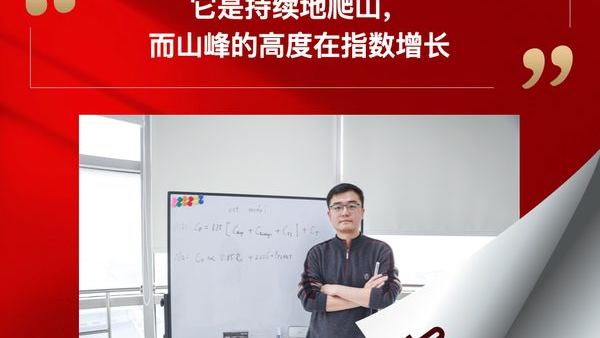
The real fuel for fusion isn't deuterium-tritium, it's deuterium-deuterium
The D-T route has to breed tritium while it generates power, and both regulation and cost are high; D-D involves no tritium and is the precondition for a scalable commercial power plant, but the triple product has to climb another order of magnitude from 10^21.
 2:29:41
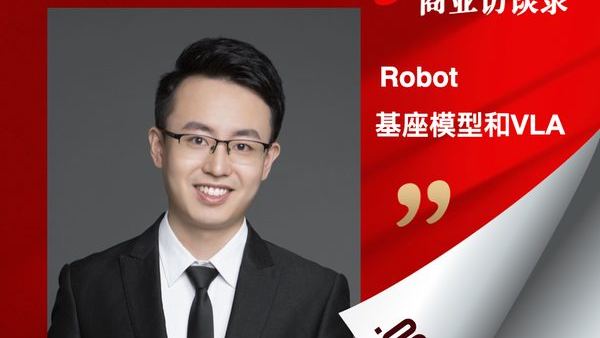
Robots don't need to wait for an aha moment to land
The robotics field hasn't had an aha moment like large models did, but the slope of capability improvement is already rising. Every year, every month of capability growth unlocks new commercial opportunities along the way — you don't need to wait for general intelligence to mature before finding applications.
 2:01:10
Pretraining Is the Main Peak: Intelligence Itself Is the Biggest Application
Model companies are refineries; the value is in chemical plants and car companies. But today's biggest dividend is capturing intelligence spilling out of research, not building product-pulled applications.
 2:00:19
L3 Is Not an Extension of L2 but a Precursor to L4
Li Auto's autonomous driving team used end-to-end to cut 2 million lines of code down to 200,000, and longitudinal control beat every competitor for the first time — not because the people got smarter, but because they finally built capability instead of features.
 3:22:46
The world is not linear extrapolation: be the important variable in the game
If the world ran on logical deduction, today's biggest recommendation engine company would be Baidu. Xiao Hong says what a founder must do is not deduce the inevitable, but make themselves the variable that changes the outcome of the game.
 2:36:12
DeepSeek rewrites the architecture with brute-force aesthetics, pushing Full Attention below the line
Dynamic sparse attention used to only accelerate inference. DeepSeek is the first to pretrain with it from scratch, and its loss curve and downstream evals beat Full Attention across the board — sparse attention is no longer just a cost-saving patch.
 2:07:21
AGI Is Humanity's Last Invention, but 95% of Companies Are Flooring the Accelerator
Zhang Qianchuan compares human civilisation to a car that has driven 10,000 kilometres, with AGI as the final kilometre: ahead may be a wider highway, or a cliff. And what the vast majority of AI companies are doing is flooring the accelerator.
 53:07
53:07Zhang Ya-Qin: Information Intelligence Tops Out in Five Years, Humanoid Robots Need Another Ten
He splits AGI into three layers — information, physical, biological: information intelligence reaches human level within five years, but that is the IQ of a brain; reading ten thousand books still won't teach you to swim, and physical intelligence has only just begun.
 3:20:52
DeepSeek trained a 671B model on 2000 GPUs by betting on techniques no one dared try
Every DeepSeek innovation was forced out by cost: from MoE to MLA to FP8 training, they tried what others wouldn't at scale — and finished a single training run with no rollback.
 1:03:08
Zhu Xiaohu Changes His Tune: DeepSeek Has Him Almost Believing in AGI
A year ago he said he would never invest in any Chinese large-model company; now he says if Liang Wenfeng opens a funding round, "I would definitely invest" — price no longer matters much, what matters is being part of witnessing the emergence of human AGI and AI consciousness.
 2:49:35
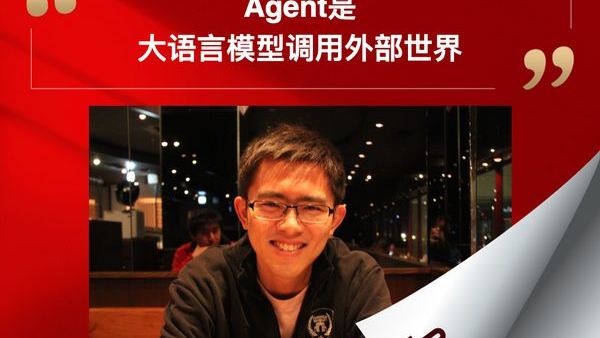
R1's most valuable output isn't the model, it's the aha moment
DeepSeek was the first to solve the riddle O1 posed: without being taught, the model learns reflection and error correction on its own through reinforcement learning. R1-Zero is cleaner than R1, but R1 is the one that works.
 1:12:02
Operator Is Not a Continuation of O3 — It's the First Hand of Reasoning Reaching Into the Physical World
OpenAI tried a Web Agent in 2016, failed, and laid off twenty or thirty people; what was missing was a foundation model. Ten years later, Operator lines up three things — a foundation model, human data, and reinforcement learning — and only then does reasoning move from abstract text toward visual interaction.
 2:53:37
Li Xiang: Cars Are the Biggest Application of AI in the Physical World, but the L4 Ticket Requires Three Things
He divides AI products into three stages: enhancing my abilities, becoming my assistant, becoming family. Today we haven't even done the first stage well, so the real competition hasn't started yet.
 1:32:14
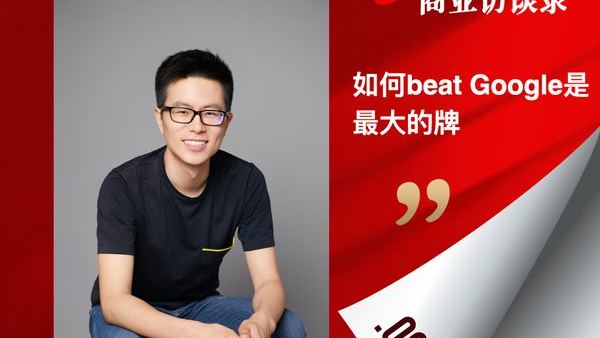
The next Google isn't search, it's a task engine
ChatGPT, Anthropic and Perplexity look nothing alike, but they are all fighting over the same thing: reorganising information and tasks. Search and recommendation merge into a task engine, and whoever holds context wins.
 52:10
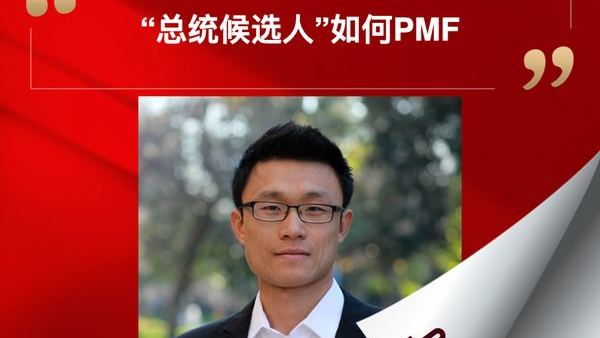
52:10A presidential election is about finding PMF for a candidate; if the product is bad, no one can save it
An election team is the fastest-scaling organization in the short term, but the product — the candidate — is already set. All you can do is product-market fit that product to the whole country's environment.
 1:44:23
Model companies will eventually disappear; product companies are just getting started
Qi Fanchao (齐帆超) argues that models themselves cannot directly create value, and that model companies will not exist in the future; he raised nearly 400 million yet voluntarily gave up training larger models, turning instead to solving the uncertainty of large-model output — the biggest blocker to productization.
 1:44:22
Nvidia Has No Clear No. 2: Who Runs the 60 Direct Reports When Jensen Huang Retires
Nvidia's strategy wasn't planned — it was locked in after tactics like three teams, two seasons and shipping a whole cow proved themselves. But the company still has no obvious No. 2.
 1:08:10
AI Is Centralized Power, Crypto Is Its Antidote
Vitalik says AI's power comes from compute and data, and the best AI is the biggest AI, which naturally tends toward centralization; Crypto's only role is to solve trust problems between people, so AI participates in Crypto's game, not the other way around.
 1:39:07
The first to build AGI will inevitably be a monopolist; China's only path is the ecosystem
The pursuit of an AGI that crushes all rivals first is, at bottom, an ambition for commercial hegemony — whoever holds that brain will invent the means to preserve the monopoly. Chinese companies can't win this money-burning game, so they have to drive inference costs down first and use the ecosystem as their moat.
 1:20:48
Zhihu's enemy isn't Douyin, it's a scale-driven version of itself
Zhou Yuan looks back: after going public, video and short content were two strategic retreats, and the root cause was treating a community as a scale business. A community can only be ecosystem-driven, growing by overflow, not by expanding the roster.
 58:50
58:50Tesla's Launch Felt Like an Annual Meeting: The Robotaxi Story Is Told to Shareholders
This launch event didn't discuss any technology; it felt more like an annual meeting for longtime shareholders. What's truly valuable is its two paths to monetize idle vehicle time: as a Robotaxi, or as distributed compute.
 1:14:53
Eight Years of Autonomous Driving Venture Capital: Companies That Started With Too High a Valuation Almost All Died
Mengxing ran the numbers: for non-resource-based frontier tech companies valued above $100 million, there don't seem to be any very successful cases yet. Companies that start too high spend their money maintaining the appearance of a good sale rather than developing quietly and scrappily.
 1:34:15
He bid $5.1 billion for Yahoo and lost to a $4.5 billion rival
Lu Fubin's offer was $600 million higher than Apollo's, and he never got an answer. Five years later the other side told him to his face: you don't have their golf club membership. In M&A there is a threshold beyond price that you cannot see.
 39:05
39:05o1 Is Not a Detour but an Advance: Fast-Thinking Models Learned to Think Slowly
Wang Xiaochuan argues o1 is a paradigm upgrade, not two steps back for one forward — you need fast thinking first before reinforcement learning can teach it to think slowly, and this path has touched the beginnings of the route from language to intelligence.
 1:14:10
o1 Is Not a Change of Course — It Just Added a Few More Rungs to the AGI Ladder
The pretraining gold mine is nearly exhausted; reinforcement learning is the second mine. o1's preview looks more like a GPT-3 moment — whether it becomes a ChatGPT moment depends on the official release.
 1:13:43
Waymo's lead isn't about the best tech — it's that it never made a fatal mistake
Waymo started earliest, cycled through four leaders, and was written off by the industry — yet it ended up the only L4 company still leading the field, because it survived and didn't make the fatal mistakes Cruise and Uber made.
 1:27:01
Companies that don't do reinforcement learning may not make it through the next wave
After language pretraining hit a bottleneck, the few hundred most core researchers in Silicon Valley have bet their resources on self-play RL, which trades inference compute for training compute and lets models explore logical reasoning on their own.
 1:31:03
Tesla FSD Is Only Assisted Driving's GPT-3 Moment, Not L4
End-to-end let FSD jump several versions within a year, but one takeover every 45 minutes versus Waymo's one critical takeover per 100,000 km is roughly a 1000x gap. For L2 the goal is the optimal takeover rate, not the lowest one.
 1:00:19
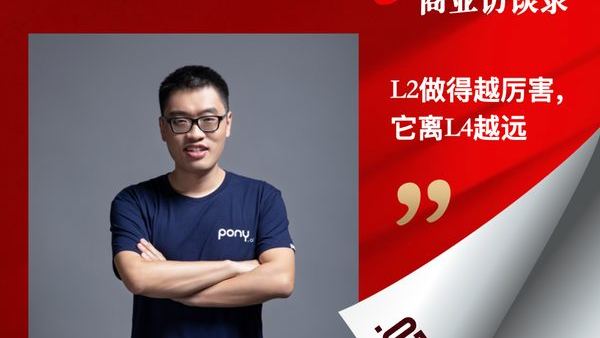
The better L2 gets, the farther it is from L4: the self-driving route war
Pony.ai's Lou Tiancheng argues L2 and L4 have different goals: L2 users just need it to be good enough and cheaper, so the better it gets, the farther it is from L4; L4 needs 10,000 hours without an incident, and it needs a ruler to judge good from bad.
 1:27:28
He Xiaopeng: Large models are bad for small companies — the stronger you are, the more data, the more cost
The network effect of big AI is: the stronger you are, the more data; the more data, the more cost; the more cost, the more cars you have to sell to support the system.
 1:06:43
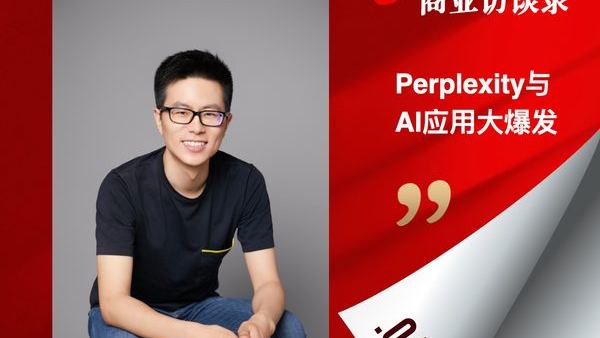
AI apps haven't broken out — and it's not a product problem, it's a model problem
More than a year after GPT-4, Perplexity is the only AI app from mainstream Silicon Valley VCs to reach 20 million-plus MAU; 90% of the reason is that GPT-4-level capability isn't enough — it can only do information synthesis, not long-horizon reasoning.
 1:02:44
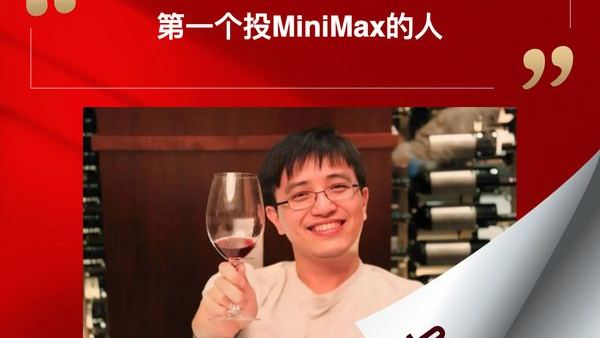
MiniMax's first investor: Big tech's price cuts are peeking at cards, startups can only eat the loss
Big tech can run models at a loss and make the money back from cloud computing; startups dragged into a price war have nowhere to recoup. MiniMax's answer is model quality first, and monetizing through overseas 2C products.
 1:14:56
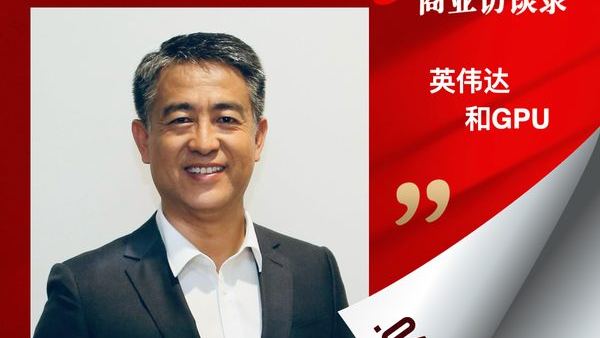
Nvidia Has No Five-Year Plan: Jensen Huang Built the Company Into a GPU
Jensen Huang's eight counterintuitive management rules aren't scattered points but a distributed operating system: 60 executives reporting directly, pay identical to the cent, no one-on-ones, no planning — the organization's communication structure determines its product architecture.
 1:29:19
The Pain of Frontier Tech Entrepreneurship: On IPO Day, I Felt I'd Let Down Those 12 Years
Li Zhifei, founder of Mobvoi, says that at the moment of the bell-ringing, he wasn't thinking of glory but of whether the outcome justified the 12 years of hardship — and it didn't. He sums up the fate of frontier tech startups as a block of ice that can melt at any moment.
 1:16:59
The Logic of Small Bets for Big Returns Has Failed. We're Now Betting on Jurassic Rodents
Dollar VC has had both its fundraising and exit ends cut off, and the leverage story — two or three hits out of ten checks — no longer holds. CMC Capital's answer: either invest in the present, where you can cash out in a year or two, or invest in the future, seven to ten years out. The middle ground is the hardest.
 1:21:56
AGI Is a Marathon: Physical Hardware Has Become the Biggest Bottleneck
Last year we thought adding GPUs and data would get us to AGI; this year we find that a single data center hits a wall at 32,000 cards, and US energy infrastructure was planned forty or fifty years ago—the AGI timeline has been stretched out by the physical world.
 1:43:49
The $43 Billion Syngenta Deal: The Peak and End of China's Buying Spree
The golden age of Chinese overseas M&A began with an official signal in 2009 and ended with the 2017 turn against globalization; Syngenta was both the peak and the endpoint. Buying cheap matters less than buying right—integration is the key to success.
 52:14
52:14Zhu Xiaohu: China's AIGC applications have already exploded — they're just all hidden in to B
Zhu Xiaohu says China's AIGC applications have already exploded, it's just all happening in enterprise services: delivery-rider accident insurance payouts fell from 150 yuan to 60, video interviews hit 1 million sessions in a year, and consumers never see any of it.
 1:31:32
Wang Xiaochuan: Slow by one step in ideals, fast by three in execution
Zhu Xiaohu looks at reality, Yang Zhilin looks at technology, and Wang Xiaochuan says both are only touching one leg of the elephant. What he wants to do is build a person, and healthcare is the towering, grounded scenario.
 1:39:15
Sora Is a GPT-3 Moment, Not a ChatGPT Moment
What Sora shows is an emergent capability, not a usable product; it pushes the large-model war to a new level, but catching up in a year is too optimistic, because between being able to do it and actually doing it lies a great deal of know how.
 1:20:00
Yang Zhilin: Model Companies Are Refineries; the Value Is in Chemical and Car Companies
In business history, the first wave of breakout companies is almost never the winner of the next stage. Model companies are refineries that extract base oil; the real value is in chemical and car companies — which is why Moonshot AI does only to C, and only to C.
 41:37
41:37There May Be No Big Business in the Future — Young People Might as Well Live the Life They Like
Wu Xiaobo divides the entrepreneurs since Reform and Opening into six waves, and the sixth is the strangest: rapid growth is over, the market is saturated, and this generation are the children of the propertied. He judges that most future startups will be small ones, and that AI has a winner-take-all quality that will not create opportunity for everyone.
 1:13:32
The Bao-Ying Battle in Blossoms Shanghai Was Based on an Illegal Takeover
In 1993, Shenzhen Bao'an used three subsidiaries to each buy 4.5% of Yanzhong Industrial, only disclosing when the combined stake hit 16%, evading the 5% announcement threshold. The CSRC fined them 1 million yuan but still ruled the takeover valid—Yanzhong Industrial was truly bought out.
 1:35:13
Miniso's Overseas Push Isn't Selling Goods, It's an Overflow of Operating Capability
Phone makers go abroad on manufacturing strength; Miniso goes abroad on brand and operating capability. It runs direct-operated stores in the US and partners with a family conglomerate in the Philippines, because wherever the traffic gateway is, that's where the strategy has to be.
 55:25
55:25The Tycoons You Envy Are Survivors: 90% of Startups Don't Live Past Three Years
Xiao Lin says the common trait of big shots is "guts" — the willingness to take on risk. But that's the survivor's view: 90% of startups don't live past three years, and the risks taken by those who made it out are hidden by the spotlight.
 1:33:06
Only three companies have replicated GPT-4, and the window closes in 2024
Globally only OpenAI, Anthropic and Google have produced GPT-4-level models, and how 2024 plays out basically decides the long-term landscape — if you can't catch up in the next 12 months, it's very hard to flip the board afterwards.
 1:05:17
The Middle East Is Not a Trend, It Is a Rising Long-Term Force
The Middle East's grand narrative is not the frenzy of China-style mass entrepreneurship, but people from many countries converging on a shared opportunity; Chinese companies enter through efficiency, flexibility and customization, but cost-effectiveness is not the first choice — alignment with national strategy is.
 1:20:13
Envy can't be eliminated, it just grows back somewhere else
You erase one source of envy, and people immediately invent another — because envy is rooted in hierarchy, and hierarchy is animal and cannot be erased. A good organization doesn't eliminate envy; it redirects the energy of pulling others down into pulling yourself up.
 1:18:16
China Is Now the World's Top Car Exporter, but Its Automakers Haven't Finished Learning Japan's Overseas Playbook
China exported 4.41 million vehicles in 2023 to take the global top spot, yet from 2012 to 2020 its total exports were stuck at around 1 million units a year for eight straight years. Japanese automakers' first overseas push into the US in the 1950s was a fiasco; they only turned it around thanks to the oil crisis of the 1970s — a crisis is an opportunity, but political risk matters as much as economic risk.
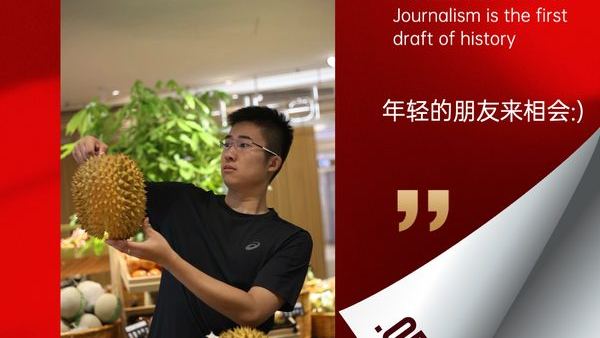 1:14:08
Post-95 founders max out their Musk score, but their idol is actually Mao
What drives this wave of young founders isn't money, it's "this thing is badass, so let's build it first"; they don't write BPs, don't chase leaderboards, don't do PR on their own initiative, and only accumulate reputation within the circles they care about.
 1:06:50
The OpenAI Coup: How a Nonprofit Board Could Fire Its CEO
A 700-person company less than five years old, a six-member nonprofit board that exercised its power once and pulled off a coup — and its largest shareholder, Microsoft, isn't even on the board.
 1:21:43
ZhenFund's Handover: After Xu Xiaoping Steps Back, Partners Can't Tax the Young
ZhenFund fights the erosion of its first-generation edge with all-hands sourcing and per-project individual ownership — every logo hangs under one name, and partners can't coast on decision-making.
 1:25:04
Double 11 Without Xiaoyaozi: Platforms Split the Cake, Merchants Eat the Loss
Double 11's complexity wasn't designed — it accreted as dozens of industry lines each piled their own playbook onto one app; the platform takes roughly half, and a merchant with a multi-billion-yuan annual business is left with a few million in profit.
 1:34:38
P&G Has No Hit-Product Mentality: It's a German Army, Not a Guerrilla Force
P&G doesn't rely on creativity or hit products. Instead, every 30 to 40 years, across a major cycle, it uses brand management plus category management to twist user research, supply chain, and brands into one rope.
 53:59
53:59Women start their careers ahead, but the child penalty grinds the advantage away
Right out of college, male and female labor force participation is nearly identical; ten years later women have fallen behind, and over the next decade or two they partly come back — a curve that lines up closely with the timing of childbirth. What gets ground down is not ability, but continuous accumulation.
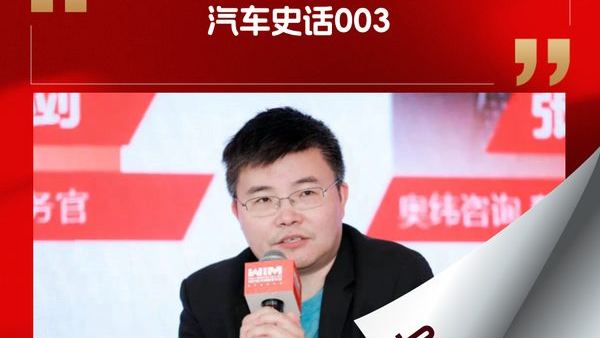 1:04:13
GM Churned Out Management Gurus Because Its Founder Was Thrown Out
Founder William Durant was pushed out by the banks, and that is precisely what made GM fertile ground for professional managers — Sloan's BU system and Drucker's management theory both grew here. At Ford, where the family never let go, the professional manager never had a seat.
 50:23
50:23The Model T Once Held Half the Global Market, Then Lost It to GM After 19 Years Without a Redesign
Ford made cars affordable for ordinary people with a single model, and the Model T at one point accounted for more than half of global car sales; but precisely because it came in one variant, one color, and went 19 years without a redesign, consumers had no reason to trade up, and the market was taken by GM.
 51:56
51:56A car is just a carriage with an engine bolted on — and not one carriage company survived
A car is not a carriage plus an engine: change the powertrain and the whole technology stack and market change with it, and not one of the carriage makers of the day lived past a century. The test for an EV company today is whether it controls the battery upstream.
 1:02:38
Models Are Not a Moat: Silicon Valley's Second AI Wave, Where the Money Starts Moving to Hardware
Silicon Valley has reached a consensus: the model itself is neither a product nor a moat — what's valuable is the use case built on top. Meanwhile, the GPU shortage is pushing investment from software toward hardware, and big-company strategic investors are entering earlier than pure VCs.
 1:04:51
The LLM cooldown isn't bad news — a decades-long technology cycle has barely started
Large language models are just machines ruminating on knowledge humans have already digested; real machine intelligence will learn by observing the world directly. After the cooldown, only those who keep building will make it to the end.
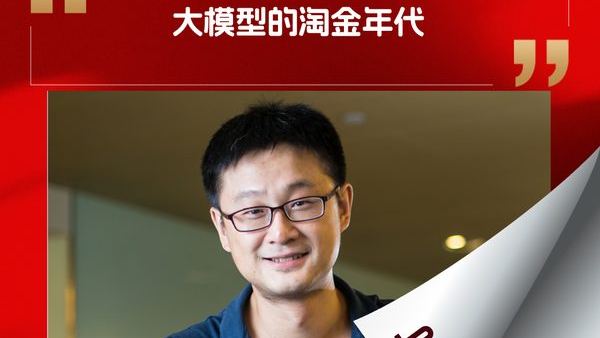 1:27:41
Define yourself as an LLM company and none of you survive
Li Di says it isn't that nine of ten LLM companies die — it's that if you define yourself as an LLM company, not one survives. Because the value you create and the money you collect are two different things: API pricing hugs cost, and the profit ceiling is 0.2 cents per thousand tokens.
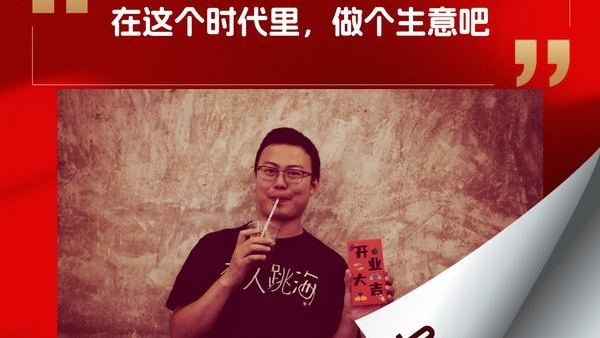 1:20:48
Tiaohai Doesn't Spend on Marketing: One Person Steps Behind the Bar, and 20 More Show Up Outside
Tiaohai never spends money on Xiaohongshu or Douyin. Its growth engine is the bartender: invite regulars and friends to stand behind the bar, and once one person steps in, his friends outside come too — 20 more people outside the door.
 1:12:17
Middle East sovereign funds don't do small deals: a Chinese GP waits at least 18 months for a first check
Middle East capital is a dumbbell: sovereign funds and family offices at both ends, nothing in the middle. Sovereign funds are going increasingly direct — they want co-investment and industrial landing, not financial returns.
 1:25:11
Mid-tier companies aren't small companies — they're the overlooked kings of second-tier tracks
Most of them are number one or two in a hundred-billion-yuan second-tier track. Their founders never settle for being mid-tier, but the track they come from largely determines their ceiling.
 1:08:29
Infighting Is Visible; Internal Friction Is the Organization's Slow Suicide
Infighting is visible and even entertaining to watch; internal friction is invisible and gets mistaken for the system and process itself. What really drags a company down isn't who is fighting whom, but everyone chasing a sense of existence amid redundant resources and a missing direction.
 1:13:06
The Man Who Brought Charlie Munger to China: Publishing's Golden Decade Is Over
Publishing has no pricing power. JD treats books as a loss-leader, selling them at a loss, because to JD the industry's tens of billions in revenue is just an advertising budget. Shi Hongjun says publishing will become a marginal industry — but also a more "noble" one.
 1:05:51
Investors have stopped funding pure content, because content is the saddle, not the thoroughbred
Content companies succeed far more often than most businesses, but their ceiling is set by the nature of the industry: a hundred flowers blooming means low concentration. So investors treat content as a whip and go looking for a horse they can ride.
 50:58
50:58Foreign CEOs Flock to China: Deglobalization Is a Political Problem, Not an Economic One
Deglobalization is coming on strong, yet it can't stop CEOs from lining up to visit China, because decoupling violates economic logic. But what actually drives decoupling isn't economic logic — it's the political logic of the number one guarding against the number two.
 1:04:14
AI Is Just a Wright Flyer That Barely Left the Ground, and We Still Can't Control It
Deep learning founder Terry Sejnowski says what large models lack isn't language but a basal ganglia — no value function, no long-term memory, no emotion — and all of those brain regions can be added. The real risk isn't scale, it's that no one knows what it will grow into.
 1:25:29
The Year the Auto Show Was Busiest Is Also the Year Joint-Venture Brands Are Most at Risk
Chinese brands' market share will rise quickly; if a joint-venture partner cannot bring value to the JV, it may become a wholly foreign-owned brand — that is the real reshuffling behind the crowded show floor.
 55:21
55:21The war over foundation models is over; vertical copilots are where the veterans get their shot
Foundation models are an emergence built by young people on Microsoft's compute, but the vertical copilots that actually make money belong to startup veterans — two-thirds of the vertical opportunities have already been killed off by ChatGPT itself, and what's left is a combined war of data, social and business model.
 1:14:21
The 2025 enterprise-software IPO wave: do first, talk later, and PS back below 10x
Over the past two or three years the entire enterprise services market was overvalued by 50% to 100%, with PS falling from 30-40x to below 10x. Beisen's IPO was a "bargain-basement IPO," but it was the first shot in the systematic listing of Chinese SaaS, and a wave of enterprise-software IPOs will come in 2025.
 1:08:18
Li Zhifei Talks People Out of General-Purpose Large Models: China Will Not Have a Second OpenAI
A month ago he said he wanted to be China's OpenAI; now he says that proposition most likely does not exist — because consensus formed too fast, the difficulty was rapidly lowered by open source and compute, and it is not even clear OpenAI itself can win commercially in the end.
 1:11:51
Large Models Are the Big Players' Game; Startups Shouldn't Follow Jasper's Path
Large models are not a replacement for search engines but a supplement. The real opportunities lie in vertical domains like healthcare and materials where large models can't capture the data, while general-purpose large models belong only to the giants.
 52:43
52:43Brazil Looks Like China Seven or Eight Years Ago, but Mid-Sized Companies Can't Survive
Brazil's tax code and labor law let both big companies and tiny teams survive — it's the mid-sized companies that get squeezed to death. Political swings left and right are themselves the one certainty, and founders treat them as a controllable variable.
 36:56
36:56Silicon Valley Bank Collapse: The Fed Protects Depositors, Not Shareholders
The Fed made a black-and-white decision: full protection for tens of thousands of institutional depositors, shareholders wiped out. This is not a Lehman moment, but a timing gap — yet the chronic decline of American credibility may have just begun.
 1:18:21
Yahoo refused to buy Google because it didn't believe search could be big
Yahoo and P&G made the same mistake: they didn't believe search would move to the front end, and they didn't believe Americans would sit on the sidewalk drinking Starbucks. When founders step back to the second line too early, the company loses the ability to take a bet.
 1:13:33
There Are More Family Offices Than Families, and Hong Kong's Wealth Management Era Has Only Just Begun
The 50% rebound in Hong Kong stocks from 14,000 points was just sentiment repair; the real new trend is Hong Kong shifting from Fintech to Wealth Management — but the barrier to entry for a family office is so low there's no licensing requirement at all, and the field is a mixed bag.
 1:07:55
Nearly two-thirds of internet middle and senior managers are leaving, but it's not an age problem
Twenty years of high growth in the internet industry relied on the technology dividend and the user dividend; the dividends masked a lack of management capability. Today organizational bloat has turned into internal friction, and the exodus is the industry's self-correction, not a 35-year-old crisis.
 1:03:10
Hong Kong's biliteracy and trilingualism is achievable by only 3% to 5% of people — this is a failed policy
Hong Kong clings to a language policy goal that only 3% to 5% of people can reach, while Singapore spent 50 years and three generations shifting from equal bilingualism to English dominance — at the cost of erasing dialects and suppressing the opposition.
 1:00:36
Cruise giants grew by acquisition; the one that bought a shipyard to build its ship went bankrupt
Over decades Carnival bought up storied lines one by one — White Star, Cunard — and at its peak held roughly 100 ships. Genting bought a German shipyard to build a 200,000-ton giant, got its capital trapped inside, and went bankrupt.
 1:09:54
Small States Don't Pick Sides: The Hedging Playbook of Five Southeast Asian Nations
Myanmar, Laos, Cambodia, Brunei and Timor-Leste — five small states that rarely fall in line behind one power, instead depending on one country for agriculture and another for defence, hedging between great powers through multi-directional diplomacy.
 1:25:18
Singapore Is Not a Web3 Hub, Just a Refuge for Global Gold Rushers
The Singapore government has been giving officials Bitcoin to experiment with since 2010, but its small size and shallow technical talent pool mean it is destined to be a hub, not a center. What is truly valuable is its mechanism of running government like a business and reimbursing startups 70% of exhibition costs.
 1:05:28
A Silicon Valley Native: In Silicon Valley You Can Be Totally Weird and People Will Embrace You
A California native who grew up in the Bay Area for 35 years says the hardest thing to replicate about Silicon Valley is the atmosphere — you can be totally weird and people will embrace you. And for Chinese founders raising money in the US, what's most often missing isn't the details, it's the ability to tell a story.
 1:19:57
Venture capital isn't about vision — it's about turning a one-shot gamble into a repeatable game
Mallaby wrote the history of Silicon Valley venture capital, and the most valuable mechanism in it is this: VC uses networks to turn an entrepreneur's one-shot gamble into a repeatable game, which is why he calls venture capital a "machine that manufactures courage."
 1:09:55
Sequoia Endures, Kleiner Perkins Falls Behind: The Difference Is Whether Leaders Manage Internally
Kleiner Perkins dropped off the top of the list while Sequoia kept leading, and the biggest difference is whether leaders spend their energy on internal management — how to hire young investors, how to develop them, and how to keep that Monday-morning decision table alive.
 1:06:15
Egg freezing isn't extracting your youth, it's taking out the eggs you were wasting
A woman releases twenty-odd eggs a month and uses only one; egg freezing retrieves the batch that would otherwise be wasted, not the four hundred of the future drawn down in advance — so it doesn't diminish your youth, it moves your life's deadline.
 33:12
33:12Meta's 4+N/2 Severance: With a Green Card It's Happiness, Without One It's a Countdown
In the same Meta layoff, people with green cards take their six-figure severance to a new job, while those without one have four months — right through the holiday window — to find their next job or leave the United States.
 1:59:15
Southeast Asia's Capacity to Govern Is Mostly a Byproduct of Massacre and War
When investing in Southeast Asia, first ask whether the regime can push its orders down to the lowest level: in Indonesia that capacity came out of a post-massacre purge, in Vietnam out of more than a decade of war — it has nothing to do with growth rates.
 1:37:27
Vietnam Won't Become the World's Factory, But It May Be the Last Confucian Emerging Market
Vietnam's GDP per capita is only $3,700, equivalent to China in 2003. Its opportunity isn't to replicate China's full industrial chain, but to pick a few industries and reach developed-country levels, the way the Four Asian Tigers did.
 58:27
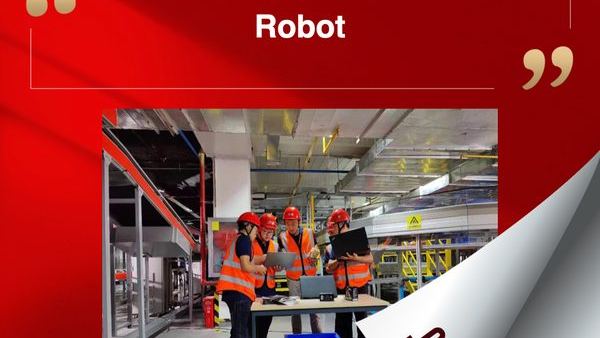
58:27Let a robot peel a potato and you can be an academician — that's harder than going to Mars
Humanity already has most of the technology needed to go to Mars; it's just an economic problem. But how to make a robot work in a kitchen is something humanity does not yet know — has not even got an approach. Whoever can make a robot peel a potato can be an academician.
 55:54
55:54The hardest part of a humanoid robot isn't walking, it's threading a needle and peeling a shrimp
Bipedal walking and autonomous navigation can both inherit from Tesla's self-driving stack; precise force control and touch cannot — that requires simulating human skin, which driving never needs. The first- and second-generation robots are probably only at 20% to 30% of a human.
 54:45
54:45The capital winter isn't a shortage of money — it's everyone waiting on the sidelines
‘Capital winter’ gets declared every two or three years, and usually passes in six to eight months. This time is different: the dollar pipeline that ran abroad at both ends has been cut. It's not that there's no money — it's that nobody knows how to invest it.
 38:30
38:30TikTok Grew Up Under Facebook's Nose, and It Wasn't the Product That Did It — It Was the System
ByteDance won on systems, not individuals: a recommendation algorithm, a UG platform, and a commercialization machine stacked on top of Musical.ly's product shell, then pushed hard with an ARPU playbook benchmarked against Facebook — that's how the world's fifth-largest social app got built.
 45:03
45:03No Gaps, Total Suppression: TikTok Spent $10 Billion to Dig a Moat
TikTok's first engine of globalisation was money and a code phrase: roughly $10 billion over a few years on user acquisition, content subsidies and servers. Any rival that wants to block it needs $20-30 billion ready.
 35:22
35:22TikTok Was Once Facebook's Most Honored Customer, Until It Hit 100 Million DAU
TikTok's most important early ad channel was Facebook, with promotion budgets growing over 100% every quarter; Facebook concluded its retention was too poor to keep users, and instead funneled traffic to it.