All-In Podcast
Four investors weekly; strong opinions, plenty of noise
 1:34:06
Anthropic should take $250 billion cash at a lower valuation, not chase $20 trillion
Chamath argues that Anthropic should price its IPO to clear the market—raising at least $200 billion, ideally $250 billion in cash at once—rather than inflate its valuation to $20 trillion, because financing risk over the next few years vastly outweighs technology risk.
 41:55
His Greatest Mistake Wasn't Fraud—It Was Three Years of Silence
Billy Evans recounts how the judge required fighting "in court, not in media," and Holmes obeyed so scrupulously she said nothing to press throughout; he contends this silence was her greatest mistake—her power has always come from telling her story.
 25:17
Quantum computing's only trick: factorization—everything else loses to a laptop
He says quantum computers have just one trick to beat classical computers—breaking factorization and elliptic curve encryption—while all other operations are slower than a laptop, which is why he's shorting the entire industry.
 1:33:15
Claude trained as ‘conscientious objector’ able to resist user instructions
Anthropic trains Claude with an ethical constitution to refuse human instructions—Sacks argues this is far more dangerous than ‘listen to users, don't break the law’, and might be the very backdoor through which superintelligence escapes human control.
 1:22:29
Regulating AI will shift from controlling models to rationing compute like electricity
Friedberg: models iterate every 11 days and escape regulation anyway. What matters is GPU and server supply—governments will eventually control compute allocation.
 52:49
Valuation doubles in one round with no fundamental change: that's the bubble signal
Later-round buyers willing to pay two or three times more for the same company while fundamentals stay flat—The Chainsmokers' Drew Taggart says that's the bubble market signal to watch right now.
 51:16
American Healthcare Won't Fund Prevention: Employees Job-Hop Too Fast
People on average switch jobs and insurance every two to three years, but preventive treatments take ten to twenty years to show returns—no insurer will invest in patients who'll have jumped to another plan by then.
 1:34:24
Anthropic publishes 'pause AI' while launching frontiers and a biolab—self-made IPO crisis
Dario issues a 'pause frontier AI' manifesto while releasing the latest frontier model, warns of biotech risks while opening a wet lab—guests read it as governance failure, not regulation.
 25:30
PE can never replicate this because unified tech and teams can't be resold
Founder mystique isn't required: Bending Spoons uses unified tech infrastructure and small teams to push acquired products to excellence—a playbook PE can't copy because PE needs to keep companies separate to fatten and resell them.
 55:44
Silicon Valley Makes Too Much Money, and That's Why California's Government Has No Incentive to Get Better
California has been a one-party state for 16 years — not because voters want big government, but because Silicon Valley's tax payments are so generous that the government doesn't need to survive on results. Gubernatorial candidate Steve Hilton says the price is the highest poverty rate, unemployment rate and cost of living in the country.
 17:40
Supersonic Passenger Flight Stalled for Fifty Years — the Blocker Was the Engine, Not Aerodynamics
Concorde was banned not because the technology failed but because its sonic boom hit the ground; Boom uses atmospheric refraction to bend the boom skyward, and the ban goes away. What actually held supersonic back for half a century was the engine — and that engine is now going to data centers to generate power first.
 22:35
AI will hit an energy wall within three years, and the fix is to build a computer that isn't a computer
Google alone burns 3.2 quadrillion tokens a month; at 10 joules per token that's 12 gigawatts, against roughly 40 gigawatts of total US data center power. Naveen Rao thinks the only way to close that gap is to replace the underlying paradigm of the computer.
 23:52
Ads Are Machine Learning 1.0: AppLovin Used It to Earn an 84% Margin
Advertising isn't AI's past tense — it's the earliest and most profitable deployment of deep learning. AppLovin used recommendation models to build an 84% EBITDA margin in the $50 billion mobile game ad market, and became its own best investor with $6 billion of buybacks.
 38:29
15 Million Died of COVID, and Nobody Ran an Independent Investigation
Gurley lines COVID up next to 737 Max, Hurricane Katrina, Fukushima and Challenger and finds an anomaly: every other disaster got an independent investigation and accountability. Six years into COVID, not even the root cause has been examined.
 38:34
NASA Administrator: We Are Not a Procurement Agency, We Are a Nuclear-Powered NASA
Jared Isaacman says NASA used to spread resources across every congressional district and partner for partnership's sake, and the result is a lunar rocket less efficient than the Saturn V; what he wants to build is nuclear power and nuclear propulsion, and to hand low Earth orbit to companies like SpaceX.
 32:32
California Passed a Law Just to Shut One 24-Year-Old Blogger Up
California's counterattack on an investigator isn't denial, it's legislation: the moment he uploads the footage he shot, he's fined $4,000, then pays the other side's legal fees. The person who introduced the bill is the state attorney general's wife.
 43:52
The Antidote to Data Center Backlash Is Writing Tax Revenue Into Teacher Paychecks
In a Louisiana parish, Meta routed the sales-tax surplus from its data center straight into teacher salaries, with one teacher netting about $45,000 more a year — the conclusion being: build real impact first, then talk about how you communicate it.
 27:32
Frontier AI companies built Frankenstein, then asked the government to regulate it
Vance says: if you're building Frankenstein, first, stop; second, when companies come asking for defensive tools, give them those — instead of outsourcing the risk frontier companies created to global governance bodies.
 36:33
Microsoft Won't Chase Frontier Models: Nadella Says the Real Business Is Being Everyone's Middle Layer
Frontier labs are fighting over who builds the strongest model; Nadella says Microsoft's job is to let enterprises "use all models but be independent of all models" — excess profit at the model layer gets crushed by open source, and the money is in applications and the middle layer.
 1:04:25
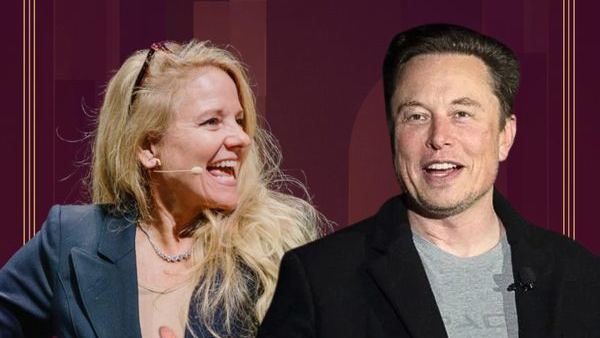
AI giants testing each other's models is more workable than building a regulator
Elon says the AI danger is real, but the fix isn't a UN-style regulator — it's letting competitors run test harnesses on each other, because no one can grade their own exam, and it's the only kind of proposal China would accept without losing face.
 46:47
Jensen Huang: The AI Doom Narrative Is Made Up, and Superintelligence Is Already Here
Jensen Huang calls the frontier labs' extinction predictions "made up" and irresponsible, and says superintelligence is not future tense — in narrow domains like autonomous driving and protein synthesis, it already does better than humans.
 1:35:57
The AI Doom Narrative Is a Psyop, and the Target Is Open Source
Anthropic asks public markets to underwrite it at a trillion-dollar valuation while its safety lead endorses the claim that AI may end civilization — not an internal contradiction, but regulatory groundwork aimed ultimately at open source.
 1:31:56
AGI May Already Be Here This Year; What's Left Is Turning It Into Money
Chamath's judgment is that AGI has essentially existed since the start of this year, and the only difference is the pace at which closed labs choose to release it — the gap will be closed within three to four months. The real bottleneck isn't benchmarks, it's how companies and ordinary people organise it into something with ROI.
 1:36:41
Nvidia's Best Quarter Ever, and a 12x Multiple
The market isn't doubting $60B in net income — it's betting competition is coming. The most profitable quarter in history paired with the cheapest valuation in history is the most counterintuitive thing in this episode.
 1:30:20
Peer review was retconned after 1965, and physics turned overnight in 1984
Weinstein says peer review is a fake story retroactively inserted after 1965, that physics turned overnight toward a safe direction between 1983 and 1984, and that the stagnation may have saved humanity.
 55:59
American Science Doesn't Lack Money — It Spends It Wrong
The NIH budget rose from $14 billion in 1998 to $47 billion in 2024, yet output efficiency halves every 9 years. Kratsios's answer: the problem isn't the budget number, it's the funding mechanism itself.
 1:30:53
The open-source ban is coming: stand up the body, write it into law, then close open source in the name of fairness
Sacks lays out the three steps by which an open-source ban actually lands: first stand up the body, then write it into law, then shut open source down in the name of standards applying equally. Chamath argues the real political fuel is voters' revulsion at two men about to become trillionaires, and has nothing to do with AI safety or with water and power.