Latent Space
Technical interviews from an AI engineer's view; one of few shows linking papers to products
 1:49:56
Models identify chemists from molecules — but learn style, not chemistry
Classifying 1,815 chemists' molecules, AI predicts authorship with 60% top-5 accuracy based on style alone, yet fails to learn actual binding physics — why Leash trains models exclusively on proprietary DEL data.
 1:11:57
Robots shouldn't just learn actions—they must learn to predict the whole world first
Dyna's world-action model lets robots generate future video in their imagination first, then generate actions accordingly; the founder calls it chain-of-thought for robots, and it's the fundamental divide with the VLA approach.
 31:56
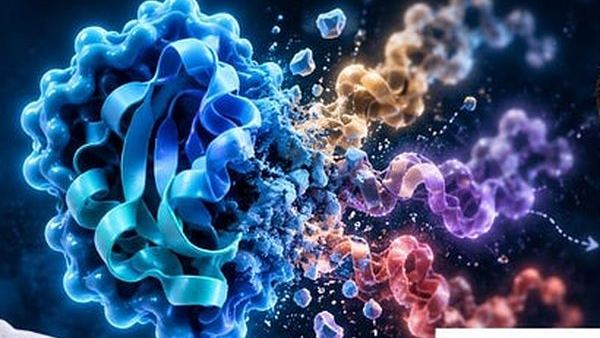
31:56AlphaFold Didn't Solve Protein Folding — It Copies Deposited Static Structures
AlphaFold merely recreates the single protein conformation that humans already solved and deposited in the PDB. It never learned actual dynamics, disorder regions, or folding pathways — nowhere near scientifically 'solving' protein folding.
 1:24:00
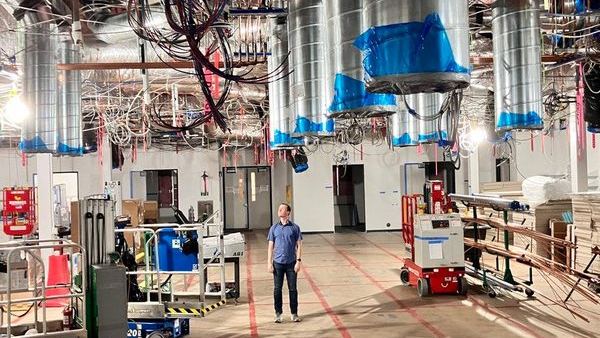
Room-temperature superconductors can't be computed by AI in one shot; they require hard lab testing
Even perfect density functional theory can't fit 10²³ atoms into a computer; scientific discovery by definition lies beyond training data—this is why even next-generation models must rely on repeated lab experimentation.
 1:41:28
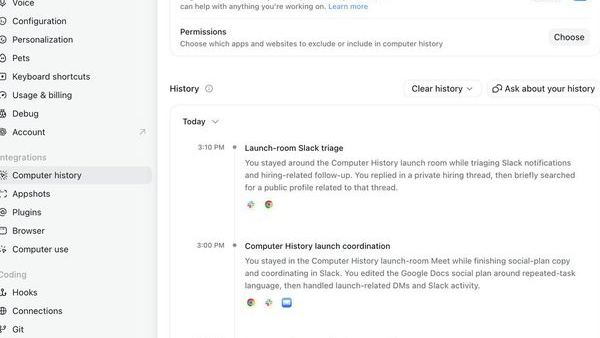
Claude Code and Codex are fundamentally the same architecture: the next windfall is in replacing it
The author argues that mainstream programming agents like Claude Code, Codex, and Pi share nearly identical design choices when deconstructed; the real quantum leap comes from novel harness designs like RLM, which offload context to disk and enable composable sub-agents.
 39:12
39:12OpenAI shipped its competitor's clone in a week—no new model training involved
The Decisions API was born as a reflexive response to a competitor's product going viral; OpenAI shipped a clone in a week, the secret: structured output and batch-parallel inference layered onto the existing Luna model—no new model training.
 1:20:43
Training the model is the easy part; shipping it to developers is what the top labs keep failing at
It took Anthropic more than a year to get Claude into developers' hands; OpenRouter can put a new model in front of 1 million developers on launch day — distribution, not training, is the model labs' biggest weakness.
 1:36:21
Runway Bets 1,000 A100s: World Models Skip the Digital Twin
Runway signed for a 1,000-A100 cluster while still at Series B, betting the video scaling law would hold; now its world model can roll out policies from a single photo of an environment, bypassing the old path of building a digital twin for every task.
 1:31:58
AI can now build a virus; the defense side is still stuck on sequence alignment
The models that generate pathogenic sequences and the models that tell whether a sequence is pathogenic are essentially the same models, so the teams doing design are best positioned to do defense — but the defense side is far behind, with a baseline still stuck at sequence matching.
 2:01:26
AI for Science Is Stuck on the Last 0.001 Points, Not on Compute
ERA can churn out thousands of candidate notebooks, but it can't close the gap in the last 30 places — because the inner loop is a machine, and the outer loop still needs a human to judge ‘you got this paper wrong’.
 2:20:53
The cost of RLHF is mode dropping, not misalignment
RLHF forces models to be extremely conservative in order to avoid mistakes, poisoning the probability distribution over strings; TypeSafe's Jev takes the other road, optimizing only intelligence per dollar.
 1:26:14
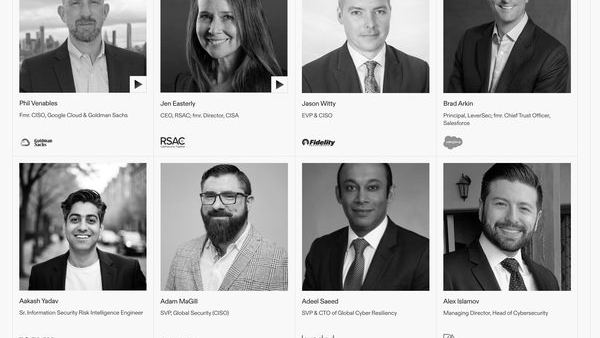
The bottleneck for AI adoption isn't capability — it's that nobody will sign their name to it
Waymo drove better than a human four years ago and still can't get into an airport — what constrains AI's usefulness was never capability, but liability, risk and trust. AIUC wants to fill that gap with standards plus insurance.
 1:32:10
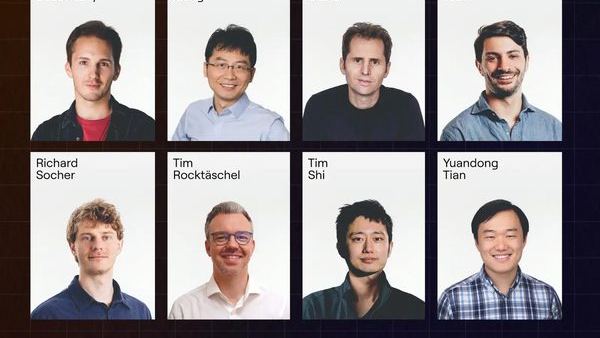
AI Can Step Outside the Hypercube, but Not Outside Known Concepts
Socher breaks intelligence into three principal components — prediction, action, and goals — and argues that today's AI can only work inside the hypercube of known concepts; it still cannot define genuinely new concepts or invent its own goals.
 1:23:31
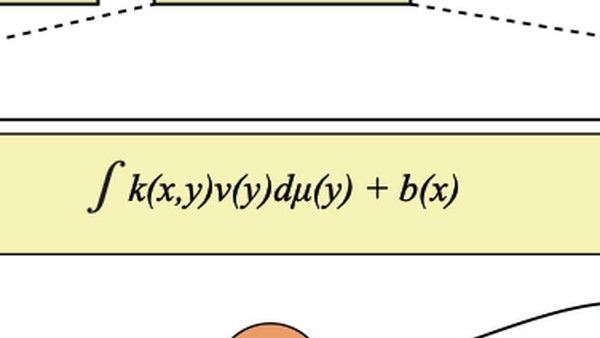
There Is No Foundation Model for Physics — Neural Operators Start Filling That Gap With Weather
Anima Anandkumar brings weather forecasting into the AI era with neural operators: comparable accuracy at tens of thousands of times the speed, on a single consumer GPU — and shows how the physical world can reach foundation models with little data plus geometric inductive bias.
 1:09:38
Simulating real people is not a reasoning problem: frontier models get only 20–30% accuracy
Joon Sung Park's argument: treating people as trainable objects does not call for a stronger reasoning model but for a model that makes the same mistakes people make — frontier models reach only 20–30% accuracy predicting the behavior of niche populations, and Simile has pushed that to 85% using two-hour deep interviews plus RCT data.
 1:35:19
Behind a 0.33Å Error: Drug Design Is Moving From Waterfall to Agile Loop
Chai designed antibodies for 50 targets and hit on roughly half; cryo-EM validation error was 0.33Å. The real moat isn't the model — it's the data, the compute, and a validation chain pharma will pay for.
 1:41:29
Quantizing More Layers Is Actually More Accurate: Errors Cancel Each Other Out
Pick the right layers and quantizing more preserves fidelity better — the errors cancel each other out. Likewise, a 10x speedup isn't a single breakthrough; it's quantization, a speculator, and PD disaggregation each doubling on top of the others.
 1:09:28
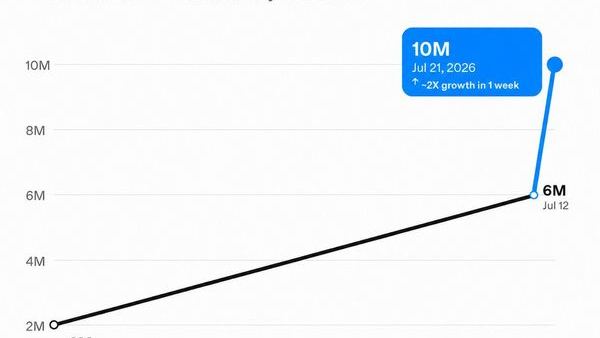
Codex Was Being Sneakily Used by Non-Engineers Inside OpenAI, and ChatGPT Work Was Born
OpenAI moved Codex's harness over to knowledge workers as-is, changing only UX trade-offs and sandbox defaults; the judgment behind it is that functional boundaries will be flattened by AI, so it refuses to draw product lines by "who you are."
 1:54:33
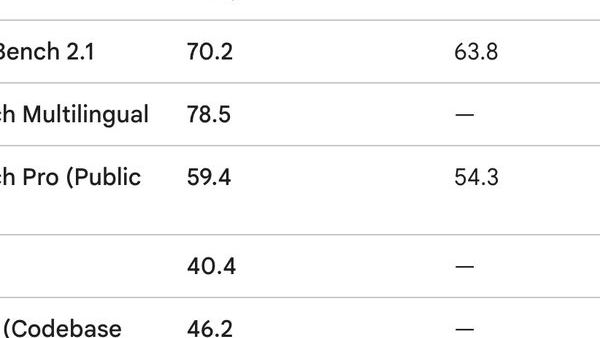
Can a Small Model Grinding for 8 Weeks Break the Foundation Model Oligopoly?
Poolside used a small model with 118B total parameters and 8B active to show that persistence and verification behavior improve coding ability more than simply stacking parameters, leading them to believe open small models can break the giants' monopoly.