Investing & Business
296 podcast deep-reads in Investing & Business. Every point and quote carries a timestamp back to the moment it was said.
 20:16
20:16A CEO explains 15% of performance variance—the same impact as changing industries
Twenty years of performance analysis show: macroeconomic factors explain 5% of variance, the industry 15%, company fundamentals 25%, and the CEO personally just 15%—yet replacing a CEO can have an impact equivalent to switching industries.
 33:46
33:46Most personal AI agents get abandoned; the shared company agent keeps getting stronger
At Every, most personal agents were voluntarily abandoned by employees because ordinary people cannot sustain the maintenance burden. Only company-level agents that receive continuous investment grow stronger with use, eventually becoming external products.
 40:33
40:33How to rebuild the $13 trillion mortgage industry: become a servicer first for six years, then sell them the software
The industry won't trust untested systems. Valon first operated as a mortgage servicer for six years to prove its technology, then sold it back to the industry as software.

Europe fell behind two tech revolutions because firing people costs too much
Garicano rejects cultural explanations: Europe's innovation lag stems from high firing costs, which prevent companies from pivoting overnight like Facebook and make them unwilling to make bold bets.
 20:31
20:31Berkshire Wins Not by Being Smarter, but by Never Being Forced to Decide
He calls this ability "positioning": keeping cash and chips in reserve so you always have options instead of being forced to chase rallies and sell panics.
 55:31
55:31Pentagon's new command would slow autonomous weapons procurement, not speed it
Critics argue that centralizing autonomous weapons acquisition requires building another four-star command with hundreds of staff—more hierarchy means slower decisions, not faster ones.
51:04Fewer than 5% of Americans pay for AI products—top spenders hit $903 monthly
Only 4.5% of Americans pay for AI products, but the top 1% spend an average of $903 per month—the real consumer AI business is propped up by a tiny fraction of power users.
 1:05:37
Trillion-Dollar Compute Trading Still Matched Over Text and Phone Calls
Compute contracts hit $10 billion per deal, yet the market lacks unified pricing and hedging tools—buyers and sellers still negotiate privately through relationships, phone calls, and text messages.
 50:39
50:39Why Government Bonds Are Risky Again
Over the past five years, most of the surge in Treasury yields has not been driven by inflation expectations, but rather by the shift from negative to positive correlation between Treasuries and stocks, as investors demand higher risk premiums.
 2:15:48
Li-Ning rebranded only the logo, but chose a spokesperson born in the 1970s
Li-Ning tried to rejuvenate with a rebrand as ‘Gen-90s Li-Ning’, but only changed the logo without updating the product. Spokesperson Lin Zhiling (林志玲) is a full generation older than the target consumer, so the rebrand quickly lost momentum.
 29:32
29:32All-In on Tanks for Saudi Deals: Brazil's Arms Giant Became a Bargaining Chip
Saudi Arabia used Brazil's Osório tank quote to pressure General Dynamics on pricing; once it got better terms, it signed a $3.1 billion order instead. The lifeline contract the company had bet everything on evaporated, and Brazil's arms giant filed for bankruptcy protection two years later.
 37:23
37:23OpenAI is eliminating model selectors: the future is one resident agent
OpenAI is merging Codex, ChatGPT, and Dots into a single resident agent without a model selector. The goal: users never choose models, never juggle multiple agents, just state what they want to do.
55:03Nearly all AI industry revenue comes from 30 million programmers; 1.5 billion knowledge workers are just beginning
This wave of AI revenue is almost entirely supported by 30 million programmers as heavy users; enterprise penetration is below 5%; once it spreads to 1.5 billion knowledge workers, the market could grow dozens of times larger.
48:18Large language model companies treat global GDP as their potential market
Foundation model labs use global GDP—not competitors—as their fundraising valuation benchmark. This is precisely why enterprises must build their own AI capabilities and cannot stake their core business on a single model provider. Figma and Harvey are cautionary examples.
 53:15
53:15Frontier labs block red teams from testing defenses, spawning an unfiltered-model business
It transfers the judgment of whether to refuse execution from the model maker to the customer, which explains why even Fortune 500 CISOs will seek out a model vendor that openly markets deregulation for red-team testing.
 1:22:29
Regulating AI will shift from controlling models to rationing compute like electricity
Friedberg: models iterate every 11 days and escape regulation anyway. What matters is GPU and server supply—governments will eventually control compute allocation.
 1:05:42
Private credit panic isn't about defaults—it's about liquidity being priced as yield
Your money hasn't defaulted; it's just locked up for a few quarters. Mistaking private credit's liquidity premium for credit risk is the real source of this panic.
 41:29
41:29Banks profit from deposit inertia; AI agents are about to demolish that advantage
Many bank products are priced on the assumption that customers won't frequently move their deposits. Once an AI agent starts monitoring your accounts and automatically shifting idle money into higher-yielding vehicles, the entire pricing logic of these businesses starts to come unglued.
59:48System records capture the price; the real procurement battle lies outside the system
Behind the procurement price numbers are dozens of meetings, hundreds of emails, and thousands of suppliers—the advantage of AI-native companies is taking over this entire invisible work, not just recording the result.
 49:25
49:25As beef grows scarcer, solving it requires accepting deeper shortages first
U.S. ground-beef prices hit record highs, rooted in the cattle cycle's bind: easing the shortage requires ranchers to hold back breeding cattle instead of selling them, which must first make today's shortage worse in order to restore the herd years later.
 1:05:14
Tariffs ruled illegal simply get rebooted under different law
The US Trade Representative invokes Section 301 of the Trade Act to impose 10% or 12.5% tariffs on 60 economies accounting for 99% of US trade, using the same tariff structure the Supreme Court ruled illegal last year.
53:31Airline fuel hedging is not just defense—it's a dual-profit game of hedges and surcharges
Because fuel surcharge revenue sidesteps the hedging P&L, airlines profit from both price increases and hedging gains simultaneously. Qatar Airways used this strategy to turn competitors into followers.
 17:42
17:42Bigger photomasks aren't technical; they're TSMC and ASML's economic answer
High NA EUV halves the exposure area and forces painful stitching; TSMC and ASML chose instead to double photomask size, trading a costlier supply chain for full-field exposure.
 1:29:22
When AI fails, the only thing America can demand is: shut down entire data centers
Verification tech to disprove safety claims doesn't exist yet, and formal national certification would take years even if it did. When crisis hits, the only enforceable demand is the most extreme one: shut down entire data centers. There's no middle ground.
 1:07:30
Stock Market Anomalies Aren't Caused by Value Investors—They're Caused by Trend-Chasers
Value investors should dampen volatility, but static rebalancers and return-chasing extrapolators together generate excess volatility, momentum, and nearly every widely-discussed market anomaly.
44:18Half the S&P's Earnings Gains This Year Are Just Cloud Giants' AI Spending
Goldman Sachs calculates that roughly half of the S&P 500's earnings growth this year comes directly from cloud giants' AI capital spending; the market is betting not on today's sales, but on whether this money converts to revenue in three years.
 25:46
25:46Credit-card rewards aren't the bank giving up margin—merchants are paying for you
Interchange—the fee banks charge merchants—is the true profit engine, so large it sustains a rewards economy worth more than airlines themselves
 52:49
52:49Valuation doubles in one round with no fundamental change: that's the bubble signal
Later-round buyers willing to pay two or three times more for the same company while fundamentals stay flat—The Chainsmokers' Drew Taggart says that's the bubble market signal to watch right now.
 1:14:47
Solo Founder Raised $20M Before Figuring Out What to Build
She sees Slack as a fifteen-year-old office building designed for humans—one where AI agents have no place. So as a solo founder, before fully clarifying her strategy, she raised $20M across two rounds to rebuild a messaging platform from scratch.
 13:09
13:09Forbes 400 account for just 3% of U.S. household wealth, yet capture half of all wealth reporting
America's real wealth backbone is 1.5 million privately held business owners worth $25 million or more—never appearing on the Forbes 400—not the 400 in the spotlight.
53:38Cloud Vendors' Capex Surge Toward $1 Trillion, Yet Actual AI Adoption Only 2%
While 69% of S&P 500 companies have deployed AI, actual impact measured by long-term tracking metrics stands at just 2%, signaling this trillion-dollar expansion is only beginning, far from reaping returns.
 1:02:03
El Niño is not a universal price button—supply concentration decides inflation
When drought hits palm oil and soybeans (concentrated in two or three countries), prices spike sharply. When it hits rice and wheat (produced everywhere), prices barely budge. Whether El Niño empties your wallet depends on supply concentration, not the weather itself.
51:27The true moat in personal agents isn't personality—it's daring to act without asking
Personality is configurable; what's genuinely hard to replicate is initiative—how far an agent dares to act without permission—and crossing that line breaks trust instantly.
 1:17:47
Doctors typically abandon surgery after 5 hours of brain compression, but she underwent surgery at 19 hours
Ackman describes how doctors typically declare brain death and abandon surgery after more than 5 hours of bleeding-induced compression, while his daughter was compressed for 19 hours before undergoing surgery at his insistence; today her cognition and sense of humor have largely recovered, though language, vision, and mobility remain in difficult recovery.
 2:14:41
Slowing the AI race delays China—it doesn't surrender America's lead
China's AI strategy is ‘fast follow’—lagging America's frontier by three to nine months. American deliberate slowdown would decelerate the entire track, not hand leadership to the follower.
 1:28:02
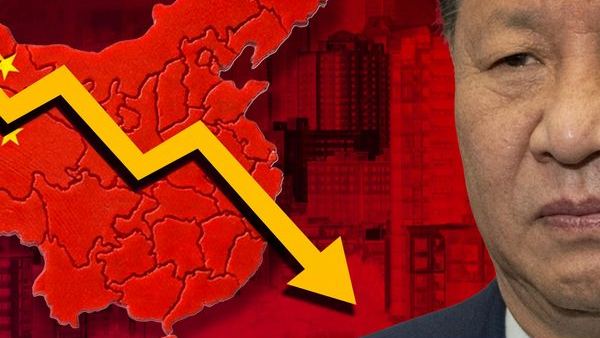
China's economy isn't collapsing—it chose chronic decay
The author argues the path to crisis has never been external shocks but reform itself—so Beijing would rather trade growth for stability, stretching a single financial crisis into chronic decay with no visible end.
 51:16
51:16American Healthcare Won't Fund Prevention: Employees Job-Hop Too Fast
People on average switch jobs and insurance every two to three years, but preventive treatments take ten to twenty years to show returns—no insurer will invest in patients who'll have jumped to another plan by then.
 1:26:13
Personal agents won't cannibalize business revenue: lower friction drives more transactions
Instinct's founder says that after reducing checkout friction to nearly zero, transaction frequency between users and merchants rose instead of falling—the opposite of the old ad-driven model.
 1:07:44
Hotel brand Aodo broke even on pillows in a year—that window is now closed
Five years ago customer acquisition cost was one-tenth of today; Aodo's one-year payback on pillows rode that wave—now Huazhu, despite greater scale, can't match that launch speed.
21:58Building a Crosswalk in LA: Approved, But Years of Waiting
A developer wins crosswalk approval, only to be told construction will take years—or much longer—with quotes running into the millions. It precisely exposes what's really true: LA's approval system looks permissive but is actually gridlocked everywhere.
 26:00
26:00Sony-Philips and Toshiba refused to yield until IBM's threat forced a DVD standard
IBM's threat to publicly back Toshiba's SD format forced Sony-Philips to abandon their MMCD standard in 1995, leading to a compromise DVD specification of 4.7GB instead of 5GB.
 40:46
40:46When AI trading, decisions are free—the power to act is scarce
Market prices update every second, making decisions nearly free; what's truly expensive is the loss and responsibility each trade carries. AI trading's value isn't in predicting price moves accurately; it's in building a verifiable, auditable channel from decisions to actions.
48:08Harvey's headcount surged sixfold in a single year—trust, not process, sustains this pace
In one year, Harvey's valuation leapt from $30 billion to $110 billion, and headcount from 300+ to nearly 2,000. Yet the VP of Talent credits this pace not to new process, but to founders' trust and employee autonomy that have never been constrained.
56:00Invoke extinction risk, propose slower releases: satisfies neither side
If AI truly carried extinction-level risk, the only self-consistent response would be nationalized control, not voluntary release pacing. The current pitch leaves both regulators and industry unsatisfied.
1:10:54Nobody remembers half a point of outperformance; save them $100,000 in taxes and you're unforgettable
Clients barely notice whether you beat or miss the benchmark by half a percentage point. But save them $100,000 in taxes, and you become irreplaceable.
 30:43
30:43America's Real Power Brokers Aren't Billionaires—They're 3 Million Hidden Millionaires
3 million pass-through business owners collectively hold wealth 13 times greater than the Forbes 400, occupy a quarter of congressional tax-writing seats, and are the true architects of US tax code and market rules.
 1:50:11
AI Safety Needs Founder-Builders More Than Money
Halcyon incubated 30 organizations in three years, catalyzing approximately 500 million dollars in funding; founder capability to build institutions is the scarce resource that turns vague, grandiose safety ideas into actual organizations.
 1:12:28
The Pacific Commander's Fleet Is All in the Middle East: Winning Without Fighting Because He Has Nothing to Fight With
Paparo made the cover of Time, with the line that his forces cover half the globe and must win without fighting; that same week 40% of the underway Navy was tied up in the Middle East, Indo-Pacific Command had just been renamed Pacific Command, and its ships were all in the Indian Ocean.
32:07Shooting days halved in a decade; the real culprit is tax subsidies, not AI
Los Angeles' shooting days plummeted from roughly 40,000 in 2016 to under 20,000, as production crews flee to South Carolina, Vancouver, and Dublin to save on taxes. AI is actually squeezing below-the-line work like lighting and makeup—screenwriters' turn hasn't come yet.
 41:38
41:38Stranded? Who Pays When Air Travel Breaks
The US automatic-refund rule doesn't care whose fault it was: if a flight is canceled or materially changed, the airline must refund you the original way you paid, regardless of whether it was weather, an ATC failure, or the airline's own mess — "not our fault" doesn't cancel that right.
 1:26:20
He calculated exactly when video sites should profit—yet never built YouTube himself
In 2003, he calculated that video sites' bandwidth costs would only make business sense around 2005–2006—perfectly timed with YouTube's founding—but because he never actually built it himself, he handed off a company now worth $300 billion to someone else.
 42:44
42:44Rebuilding Incumbents with AI Beats Investing in Startups
AI's impact on the economy is uneven: restaurants and golf courses are untouched, but incumbents with brands, licenses and network effects can become market leaders once they are re-engineered.
1:04:53America's real rich get there by owning a business, not a paycheck or a Wall Street job
Between 1960 and 2022, proprietor income's share of earnings among America's top 0.1% rose from 17% to 43%, overtaking wages — real wealth accumulation happens in unglamorous local businesses, not Silicon Valley or Wall Street.
 23:11
23:11Zuckerberg's Double Standard: Teen Safety Needs Regulation, AI Safety Needs the Market
Meta argues for uniform government regulation on teen safety, but insists the market will sort out AI safety — the same prisoner's dilemma, and he's standing on both sides.
 37:02
37:02The WNBA's Newest Team Grew 20x in Two Years, and It Wasn't the Stars
The Golden State Valkyries went from a $50 million expansion fee to a billion-dollar valuation by defining the brand before entering the market, pulling nine founding partners to the same table, and treating ticketing as just a small slice of the business.
 41:58
41:58A restaurateur's advice to three food founders beats any fundraising class
Danny Meyer's test for a brand isn't whether the product is good, but whether customers still feel cared for when you're not in the room — and that shapes the advice he gives three consumer brands.
 52:56
52:56Stocks and Bonds Are Actually Equally Risky, and Nobody Tells You
Stretch the holding period to 20 years and the volatility of stocks and bonds is nearly identical — bonds are in fact more likely to post a real loss. So what long-term investors should really watch isn't a market benchmark, it's purchasing power.
 1:15:37
AI makes starting a company easier than getting a job, but solo founders have no fallback
Durable hit a million users in three months, but its founder says he took a detour: website generation was not the endgame — handing the entire back office of the service industry to AI is. Being a solo founder isn't more freedom; it's carrying every decision alone.
 25:30
25:30PE can never replicate this because unified tech and teams can't be resold
Founder mystique isn't required: Bending Spoons uses unified tech infrastructure and small teams to push acquired products to excellence—a playbook PE can't copy because PE needs to keep companies separate to fatten and resell them.
 1:53:09
Good ayis are always on assignment: what a domestic-help consultant really sells isn't information
Domestic help is a supply-led industry: good ayis never reach the open market, and the hard part of a consultant's job isn't closing the deal but handling replacements after the sale; both employers and ayis are just conduits for a paycheck.
The 60 most recent are listed here; filter the front page by topic for all 296.