Asianometry
Semiconductors and industrial history, sourced down to specific plants, equipment models and years; almost nothing like it in Chinese
 31:46
31:46Claude's earliest work mirrors how India's IT outsourcing industry was born
India's software outsourcing industry was founded on code porting and overnight task execution; Claude is performing exactly this type of work today, which is why TCS and Infosys stock prices have fallen 40% over the past year.
 23:18
23:18IGBT reliability solved: deliberately cap the current below latch-up
Toshiba engineer Akio Nakagawa discovered that the solution to IGBT latch-up burnout wasn't raising the safe current limit—it was deliberately keeping the device's saturation current below the latch-up threshold, so it would saturate before it could fail.
 25:13
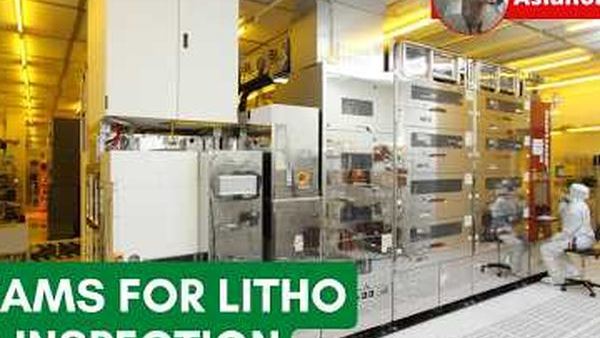
25:13ASML repurposed a bankrupt rival's multibeam technology for defect inspection
Mapper Lithography tried to replace EUV lithography with massive arrays of weak electron beams; after burning through investor patience it went bankrupt, and ASML bought the technology not to make lithography tools but to do wafer defect inspection.
TSMC builds fabs without waiting for customer contracts: it did for Apple, this time it might be Musk
TSMC built Apple a fab before Apple had signed; this time, Musk's still-forming Terafab project could push TSMC to bet early on Texas, locking in this customer ahead of Samsung and Intel.
 29:32
29:32All-In on Tanks for Saudi Deals: Brazil's Arms Giant Became a Bargaining Chip
Saudi Arabia used Brazil's Osório tank quote to pressure General Dynamics on pricing; once it got better terms, it signed a $3.1 billion order instead. The lifeline contract the company had bet everything on evaporated, and Brazil's arms giant filed for bankruptcy protection two years later.
 17:42
17:42Bigger photomasks aren't technical; they're TSMC and ASML's economic answer
High NA EUV halves the exposure area and forces painful stitching; TSMC and ASML chose instead to double photomask size, trading a costlier supply chain for full-field exposure.
 26:00
26:00Sony-Philips and Toshiba refused to yield until IBM's threat forced a DVD standard
IBM's threat to publicly back Toshiba's SD format forced Sony-Philips to abandon their MMCD standard in 1995, leading to a compromise DVD specification of 4.7GB instead of 5GB.
 21:10
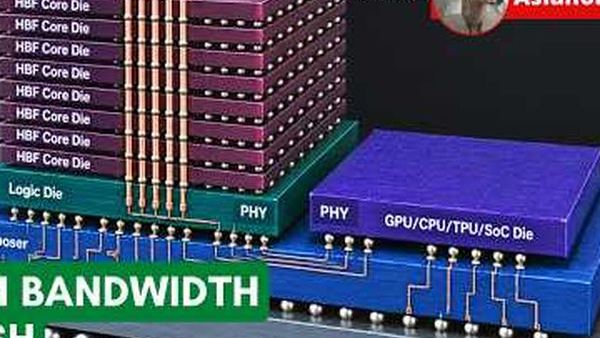
21:10The higher HBM stacks, the slower it gets — flash stacking is coming for its spot
Every layer of capacity added to HBM dilutes bandwidth per unit; Sandisk stacks NAND the same way to build HBF, with 8-16x the capacity of HBM4, but two orders of magnitude slower reads and writes, and it has to relive Optane's software problem.
 30:03
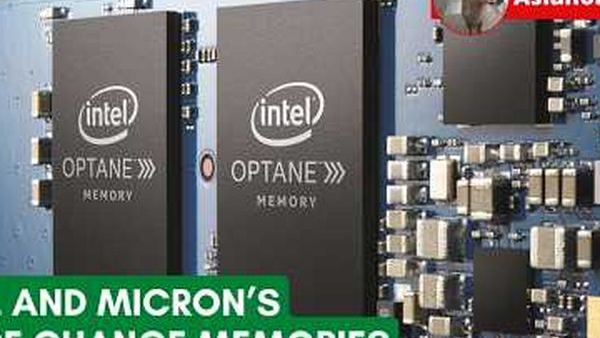
30:03Intel's Optane Died Because 3D NAND Was Too Cheap, Not Because the Tech Was Bad
Phase-change memory was worked on from 1970 to 2022, and every time it was squeezed out by cheaper flash. 3D XPoint was stuck between NAND and DRAM, worse than both, and in the end even Intel gave up on it.
 25:54
25:54The Oil Giant That Went Into Typewriters: Even at Xerox's Size, It Was a Drop in the Barrel
In 1978 Exxon merged its word processors, smart typewriters and fax machines into Exxon Information Systems to take on IBM. What it lost wasn't the technology but its own scale: matching Xerox would have been one drop in the barrel.
 21:23
21:23Compute goes from shortage to glut in 2027, and the AI bubble may not pop
Usable AI data center capacity is about 15 gigawatts at the end of 2026 and races to 45-55 gigawatts by the end of 2027, a 30-40 gigawatt increment. At $50 billion of revenue per gigawatt, the two giants would have to produce $750 billion to $1.5 trillion, and that number does not hold up.
 21:20
21:20Numerical Control Didn't De-skill Machinists; Average Skill Barely Moved
Since the 1950s, people have feared that numerical control would de-skill machinists. But A-grade machinists and NC operators earned nearly the same hourly wage, and over thirty years overall skill fell only about 1%.
 19:52
19:52Thailand's Flood Wrecked the Hard Disk Drive Industry: The Biggest Factory Fell, the Number Two Took the Throne
One flood in Thailand rewrote the hard drive rankings: the biggest player, Western Digital, saw shipments fall 51% quarter-over-quarter, while Seagate fell only 8% and overtook it to take the top spot.
AI Designing Chips Is Real; Verification Is Still the Number One Bottleneck
AI can already write RTL on its own, but the real chokepoint in the entire chip pipeline is verification: it eats more than half of development time, yet AI cannot answer "what should be tested." OpenAI's twenty-person team can shorten the front end, but the back end still has to be left to humans.
 20:31
20:31The fab bottleneck isn't the lithography tool — it's the OHT cars on the ceiling
What really caps wafer fab capacity isn't just lithography tools, but the OHT cars running back and forth on the ceiling. The 300mm transition made them mandatory, and today the market is a Daifuku–Muratec duopoly.

The Solid State Transformer Has Been Hyped for Fifty Years; AI Data Centers Are Its First Real Buyer
The solid state transformer failed three times over — in the navy, in high-speed rail, in the smart grid — because all it offered was ‘smaller’. The copper problem and the 800-volt DC problem inside AI data centers are the first reasons it has ever had to exist.

The incinerator boom was not an environmental victory — it was a business the power tariff made pencil out
A 2012 electricity tariff policy turned waste-to-energy from a money-loser into a profitable industry, and China built nearly 700 incineration plants in six years — only to end up with overcapacity and average utilization below 60%.
 15:47
15:47TSMC Trucks Half-Finished Wafers Between Fabs: The Secret Weapon of AI Capacity
TSMC exploits the more than 90% tool overlap between N5 and N7 to truck half-processed wafers from its Tainan fab to Taichung for finishing, freeing up AI capacity while N5 converts to N3. The foundation of the AI boom is a fleet of ordinary trucks.

SK hynix's turnaround ran on customer relationships, not on HBM technology
SK hynix's comeback was not a bet on HBM as a technology but a bet on customer relationships and sustained investment; Samsung, betting on PIM for edge inference, happened to hand its rival the sole-supplier position at the ChatGPT moment.
 20:29
20:29The Undersea Cable Is Becoming the World's Largest Listening Network: Not Spies, Physics
Distributed acoustic sensing (DAS) turns ordinary fiber into a continuous vibration listener: oil and gas well surveys, earthquake monitoring, whale tracking and anti-submarine ship detection all run on the same technology chain, and the ocean is rapidly losing its privacy.